

First of all… Jensen Huang – WTF!
The news broke earlier this afternoon, along with a 30 per cent rise in Nvidia shares and a 6.8 per cent jump in the Nasdaq. I’m not sure this seems like a good idea on the board’s side. Many questions remain about JH, such as the relationship of Alice Huang with the MSS and what JH knew or turned a blind eye to when it comes to chips smuggling (more concerning reporting from the New York Times here and here). Surely it would make more sense to reinstate JH after he has been totally cleared of these suspicions?
But the statement from Nvidia had this curious line:
In the process of reaching its decision, the Board received input from senior levels of the United States government, and based on that input, the Board is confident that Mr. Huang’s reinstatement poses no national security risk.
Semafor was the first to report that Trump personally dialled into Nvidia’s board meeting to make the case for JH, something that the President himself has pretty much since confirmed in multiple media interviews. It seems that he assured the board that JH will not be prosecuted. A great ally for JH to have, but how long-lasting or strong can these assurances be, especially after Trump’s term ends?
Anyway…
I’d planned for this edition to be about demographics, the other big meeting that has happened in China over the course of the Apec summit. I write in the Times today:
While Xi Jinping was at the Apec summit last week, his second in command stayed in Beijing on a rather different remit. Premier Li Qiang gave a keynote speech at the National Conference on Ageing, a two-day governmental forum on the country’s rapidly ageing population. For all the confidence that Xi exuded in Shenzhen, this meeting on the other side of the country revealed a rather more fragile side to China’s power.
China’s demographic crisis will be of no surprise or news to the readers of this Substack, but in this column I look more closely at the state of eldercare in the country. I dig into the vastly different outcomes for pensioners on employees’ pension 职工养老保险, and those on residents’ pension 城乡居民养老保险, depending on if you were someone formally employed by the state and 拿工资 (took a salary) or if you were a rural peasant your whole life.
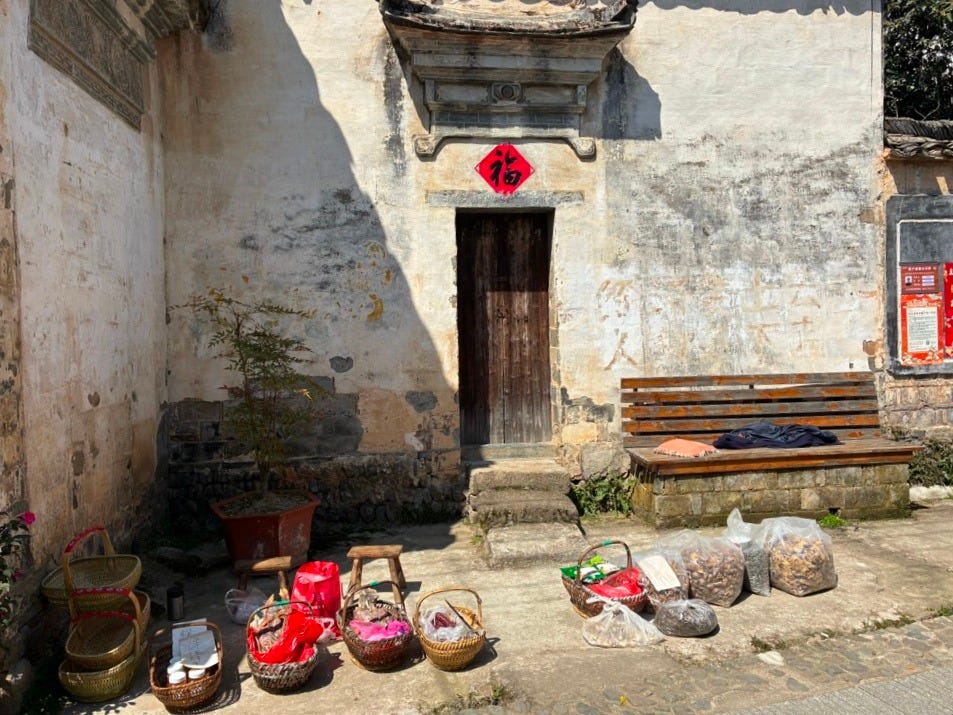
I also look into the care system as it stands – almost half of older Chinese live with their adult children, the residential care system has enough spaces for fewer than two per cent of the population over-60s, and the focus right now is on expanding community care that allows the elderly to live at home (or at their children’s homes). As I write:
[Beijing] is reluctant to pick up the bill for the ageing nation and, for the foreseeable future, it is pushing the responsibility squarely on to the shoulders of Chinese families themselves.
What I didn’t have space to get into in the 900-word column were the interesting – and sweet – details from state media reporting on the kindergartens being turned into retirement homes.
