

When I challenge Chinese diplomats that their abrasive approach is losing China friends globally, they often retort: ‘Look outside the West’. They mean the developing world (what is fashionably called the ‘Global South’ these days), where the Belt and Road Initiative is just one way in which China engages with countries long forgotten by the West. That China has friends in these places reassures and boosts Beijing’s diplomacy.
A new global polling aggregator from the Asia Society shows that the approach has been successful. Unlike surveys like Pew, which are respectable but skewed by data from western, developed nations, the Asia Society’s new Global Public Opinion on China (GPOC) pulls together data from all countries in the world to produce a nifty set of maps, graphics and tables that show the domestic public opinion on China, and how it has shifted over time. Last week, I joined a virtual panel with the Asia Society to discuss what struck me about the findings, which you can watch here.

My biggest takeaway was that China was indeed more popular outside the West than we in the West often give it credit for. The following table, taken from the GPOC, shows a regional breakdown. The darker the red, the more favourable the region to China; the darker the blue, the more unfavourable. Sub-Saharan Africa has consistently felt very positive towards China, while net positive views also dominate in Asia generally. You won’t be surprised to see what the blue regions are.
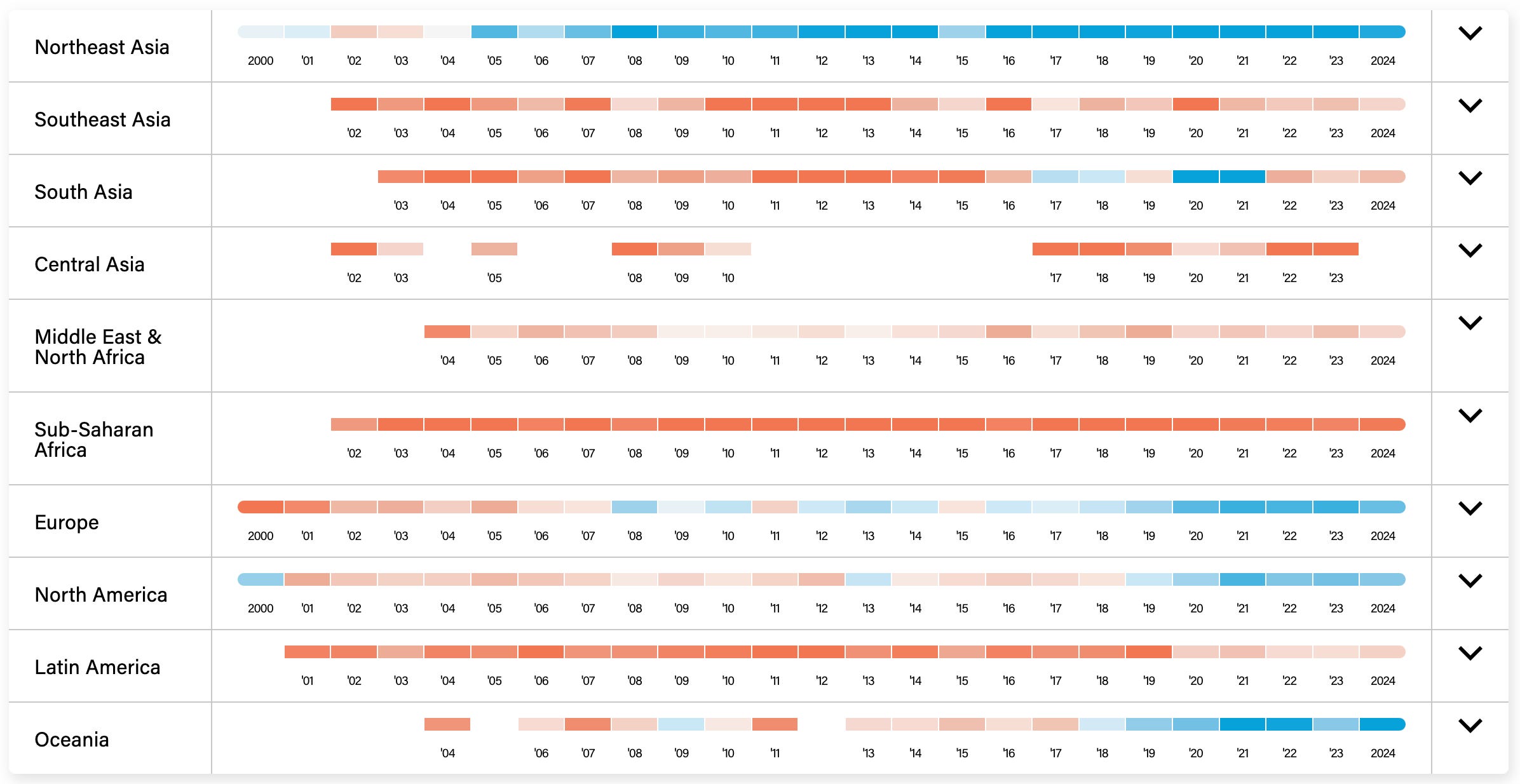
But dig a little deeper into the country-specific data, and it’s curious that some of the countries most often mentioned in dramatic reports of a new, global ‘axis of evil’ led by Beijing actually don’t like China all that much. Iranians have cooled considerably on China since 2021; and the Brazilians have often been lukewarm. This is a helpful reminder whenever you read reports about the ‘BRICS’ alliance or the idea of a China-Iran-Russia axis.
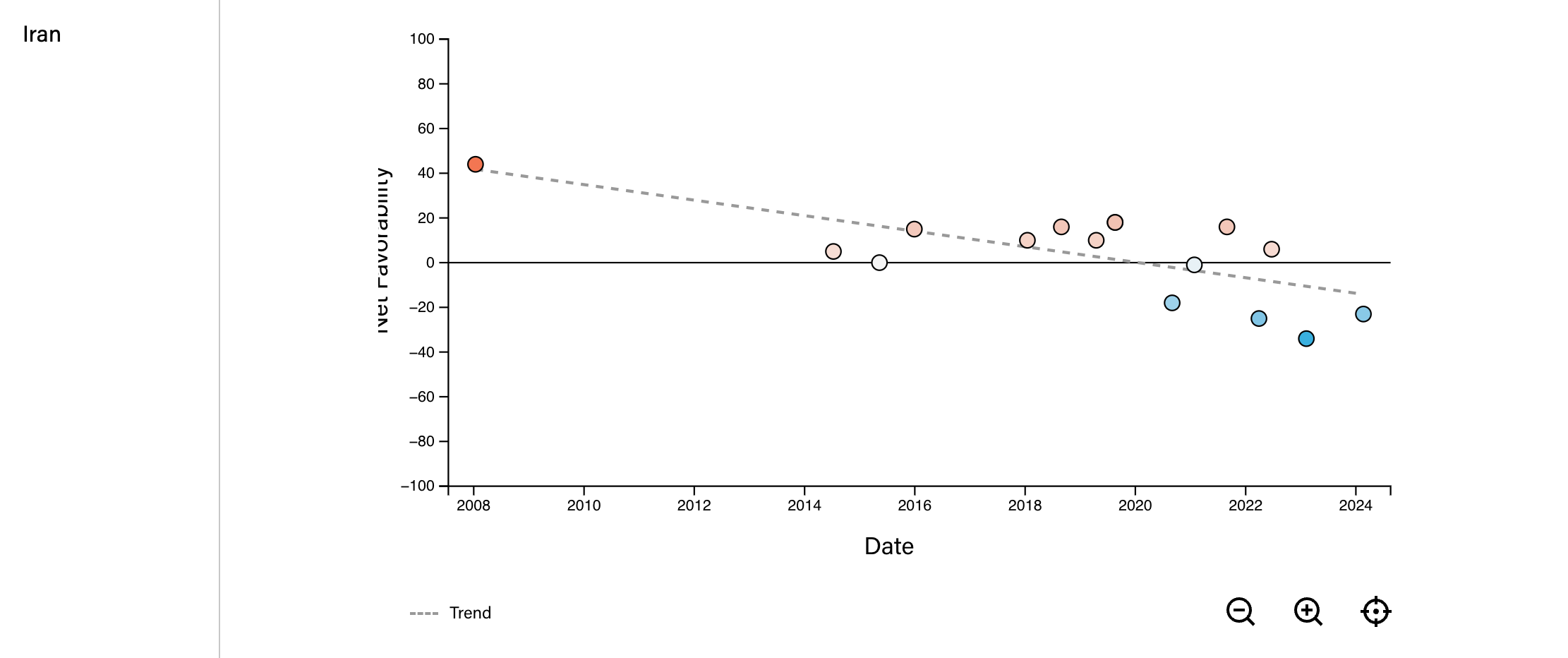
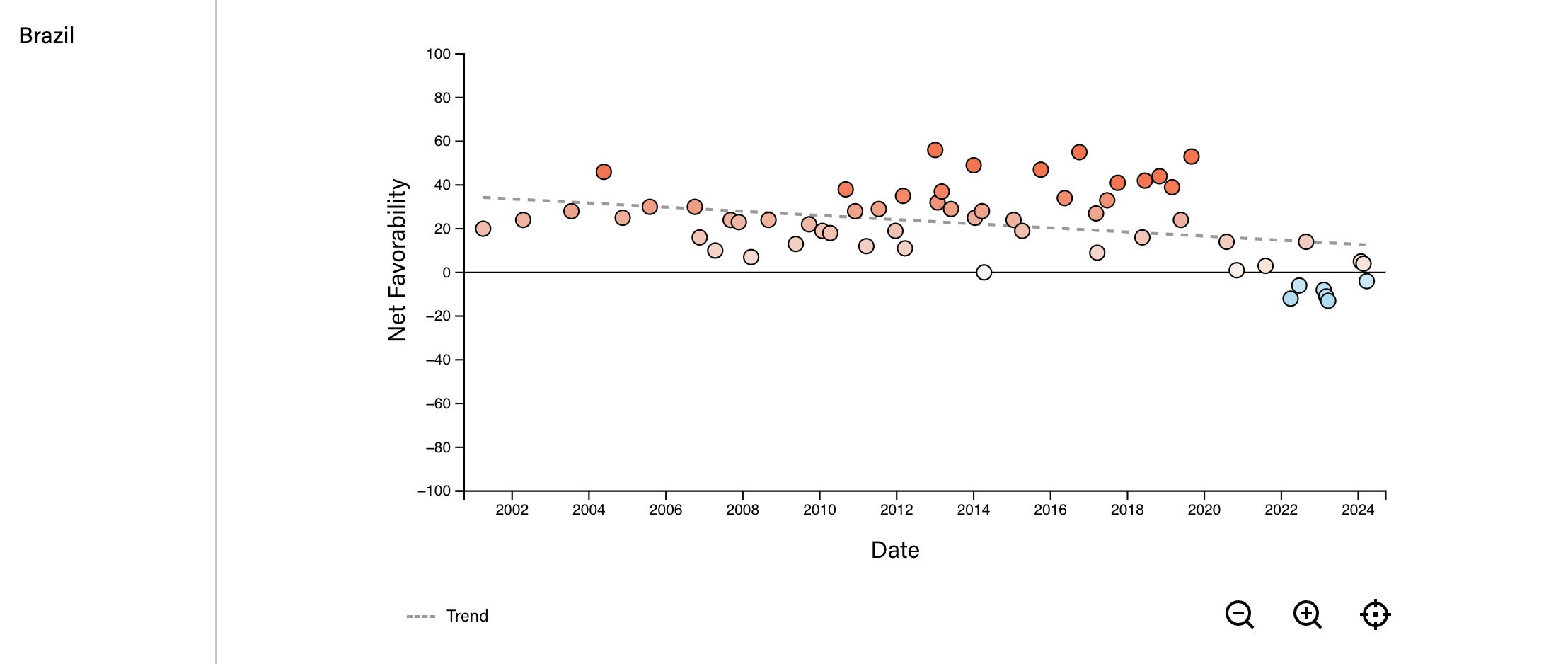
The Iranian case is particularly instructive because China’s fall in popularity there has apparently been due to a lack of economic support despite the promises of the 2021 China-Iran Strategic Cooperation Agreement. There has also been anxiety that the country may be becoming too economically reliant on China. This fear of dependence and dynamic of over-promise and subsequent disappointment repeats itself across the world, tinging many countries’ friendships with China with anxiety.
As China continues to rise, its interactions with other countries will, I think, afford more opportunities for conflict and disappointment than for friendship. After all, has any empire – Chinese, American, British, or any others – ever won more love than fear? It is perhaps no wonder, then, that China’s net favourability has dropped into the negative since 2019. Chinese diplomats may well celebrate their developing world friends for now, but their toughest days lie ahead.

Do you live outside the US or the UK? I’d be fascinated to know how your country sees China, and why.
Great post. I think part of the failure of the China dialogue in the west is that we view international relations as a relatively zero sum game - you are an ally or not.
Whereas in much of the world more nuanced approaches are accepted rather than just a you’re with us or against us mindset. Asia has lived with a “big China” for a long time and lived alongside her, whereas the West hasn’t dealt with a China with a global reach before.
Also what’s missed by many in the West is the large scale Chinese cultural influence in places such as Singapore, Indonesia and Vietnam. So at times the China as a nation and Chinese culture are not distinctively separated in the way we think of in the West.
This podcast by China Talk was super interesting in terms of how countries have handled China historically:
https://www.chinatalk.media/p/asias-great-power-wars
In France as in most western countries the perception of China till recently has been quite negative in the medias and in elite circles - companies often thinking of their consumers as cash cows. But Deep Seek has been a Sputnik moment: media coverage has radically changed and China is now presented for what it is, an innovative powerhouse. And standing firm against US tariffs is even more so shifting the perception as a possible ally in the new geopolitical reality.