

My latest Times column isn’t about China at all, but AI and the value of writing in the age of super intelligence. I come out, perhaps somewhat controversially, in defence of writers using AI (mainly for research, not to pass off AI-generated text as their own). Have a read if you are interested!
But seeing as this is a Chinese-focused Substack, I’ll use today as a chance to share some nice photos and reflections from my latest China trip.
I spent most of March there. This time I took myself off the typical Tier-1 city route and lived in a village in Anhui. Over the course of the week, I met local retirees, business owners, and historians – a remarkable handful of people deeply fascinated by their own past. I got a sense of what successful rural revitalisation, something Xi Jinping has been talking about since 2017, could actually look like in practice.
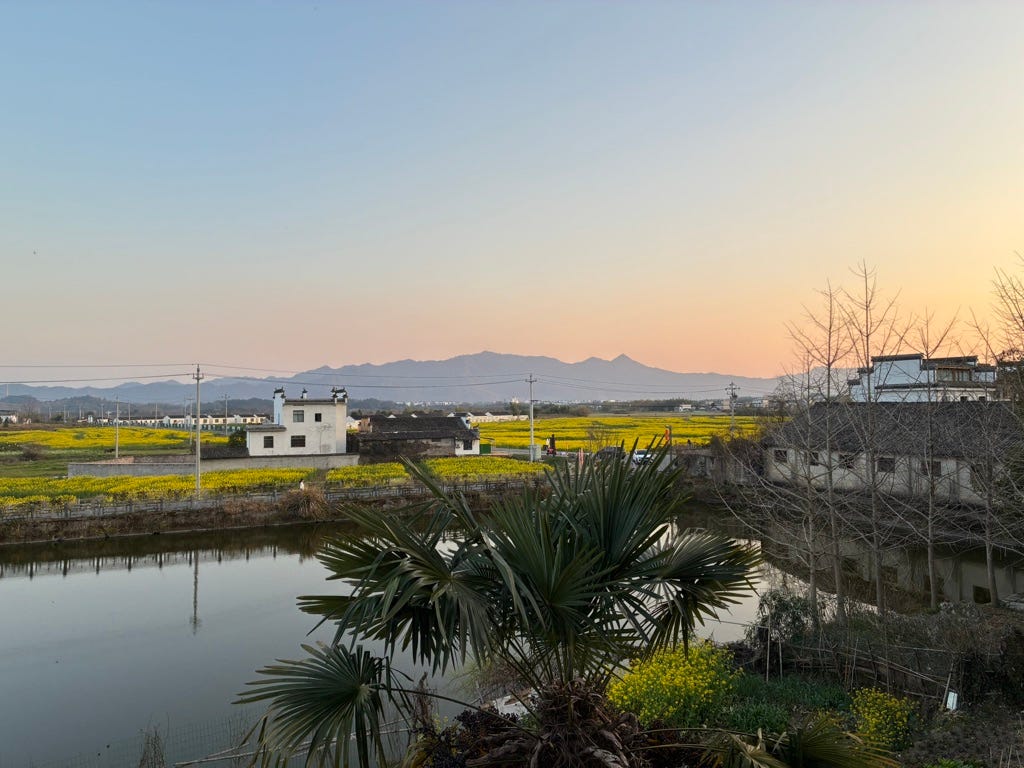
Bishan (碧山) sits in Yixian county in Anhui province, in the foothills of the Yellow Mountain. It’s a village of around 3,000 people, transformed from the early 2000s, when – like so many other Chinese villages – it was home almost exclusively to the very old and the very young, the working-age population long since gone to the cities.
Its revitalisation began in 2014, with the opening of the Bishan Book Bureau (碧山书局), the first rural outpost of the Nanjing-based bookshop chain Librairie Avant-Garde (先锋书局). Its owner, Qian Xiaohua, is a true believer in bringing life back to the countryside. ‘Some people said I was an idealistic madman,’ he said.
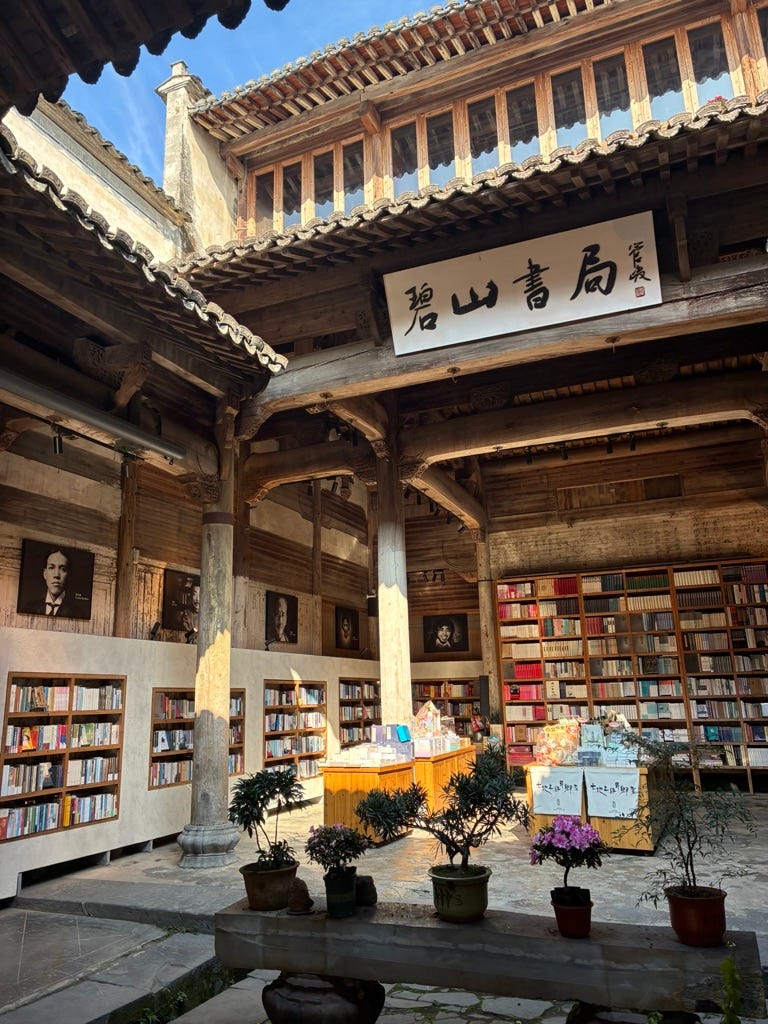
Today, Bishan is home to dozens of artisan shops, cafes, and guest lodges. On weekends, it fills with well-heeled visitors from nearby cities, arriving in shiny SUVs.
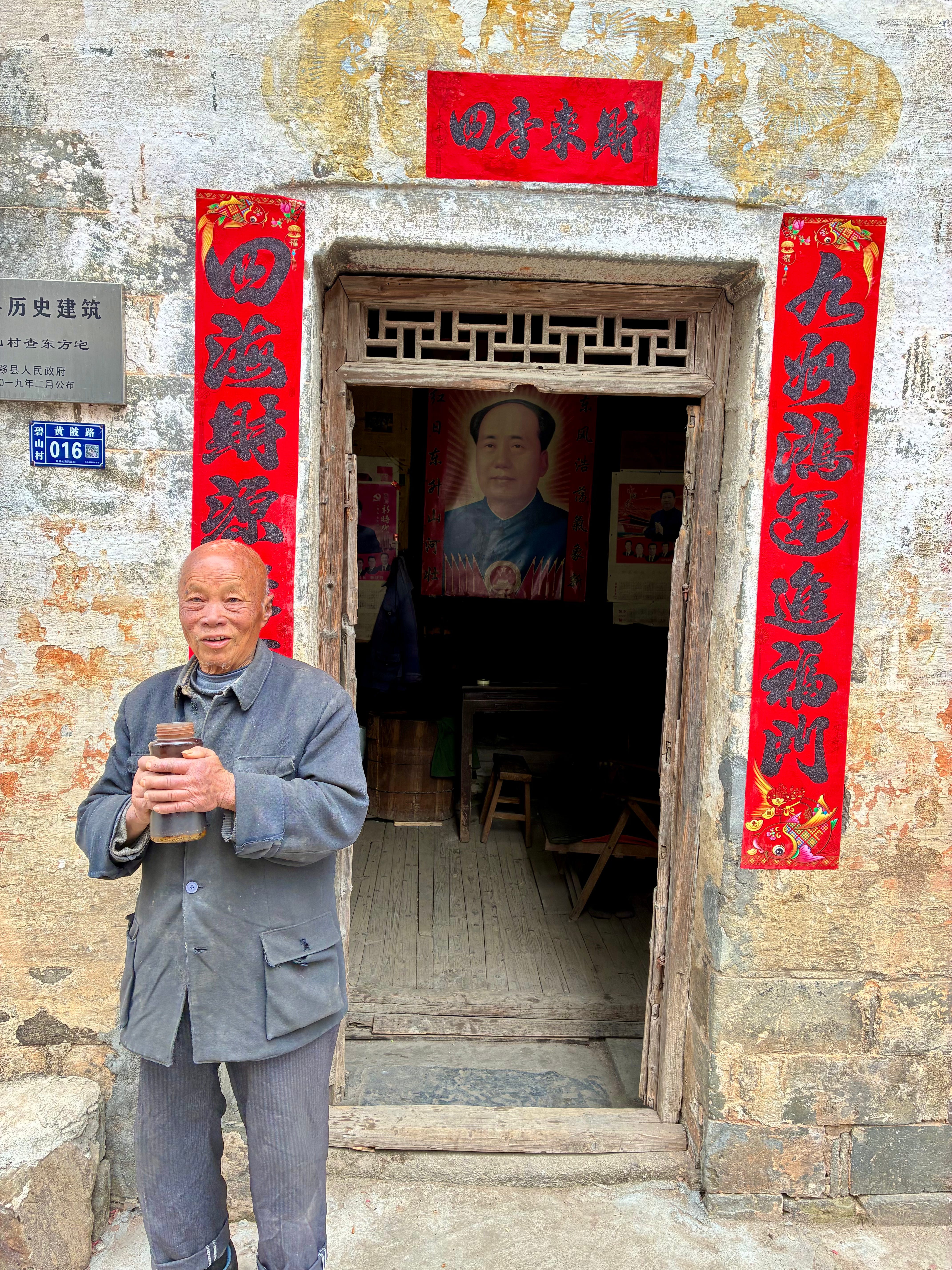
But revitalisation has its limits. The Chinese urban-rural divide – where average urban incomes remain more than double those in the countryside – is still very real, even here. I couldn’t understand much of what one friendly octogenarian said to me; standardised Mandarin, the version of spoken Chinese rolled out under later Communist-era education, and he could only speak the local dialect. But his dress and his home were like relics from a previous era.
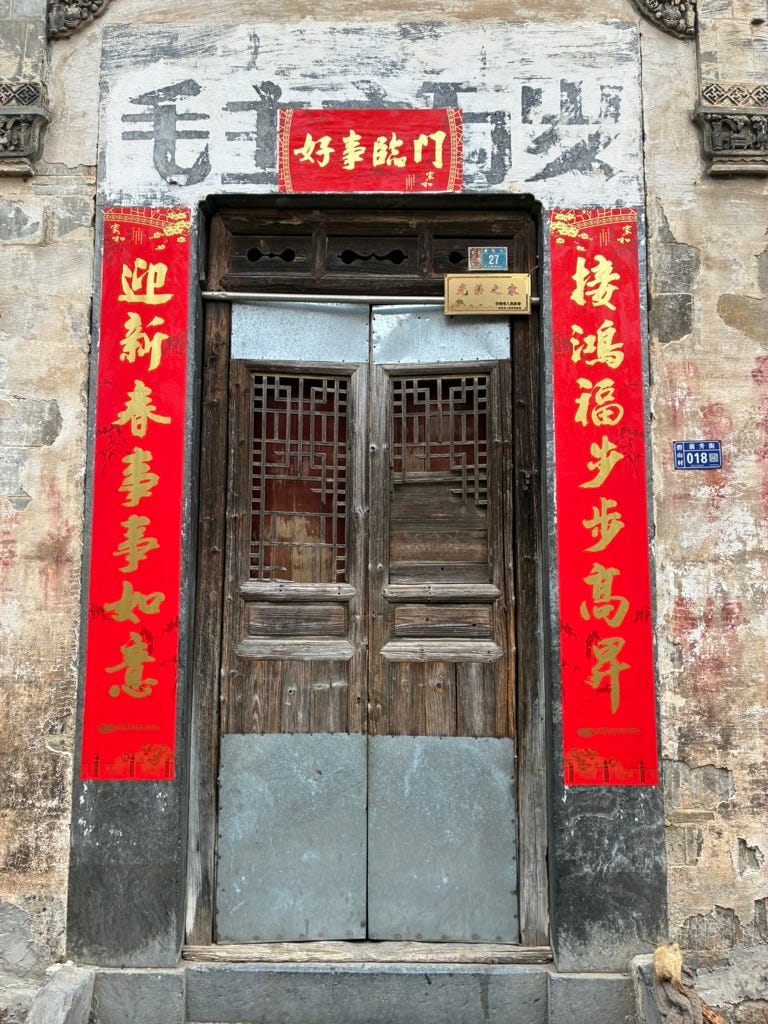
Elsewhere, more reminders of the twentieth century. On one doorway, the slogan ‘Long Live Chairman Mao’ was still just visible beneath the Chinese New Year decorations.
I have a piece for The Times that I hope will come out soon, more about Bishan and the project of rural revitalisation in general.
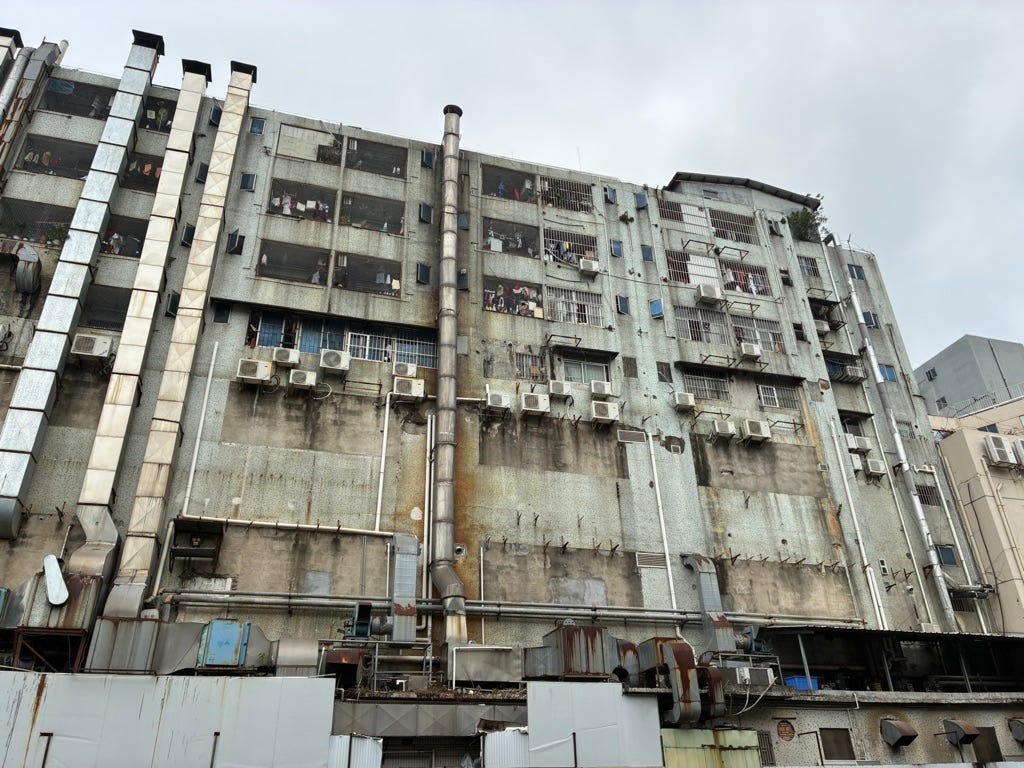
I ended the trip in Shenzhen – very much a culture clash. But then again, a clash that hundreds of millions of Chinese villagers who left home to become urban workers have felt for decades. Many of their ‘villages in the city’ (城中村), or what we might call urban slums, have been tidied up now, but there are still neighbourhoods that carry the memory of an older factory era.
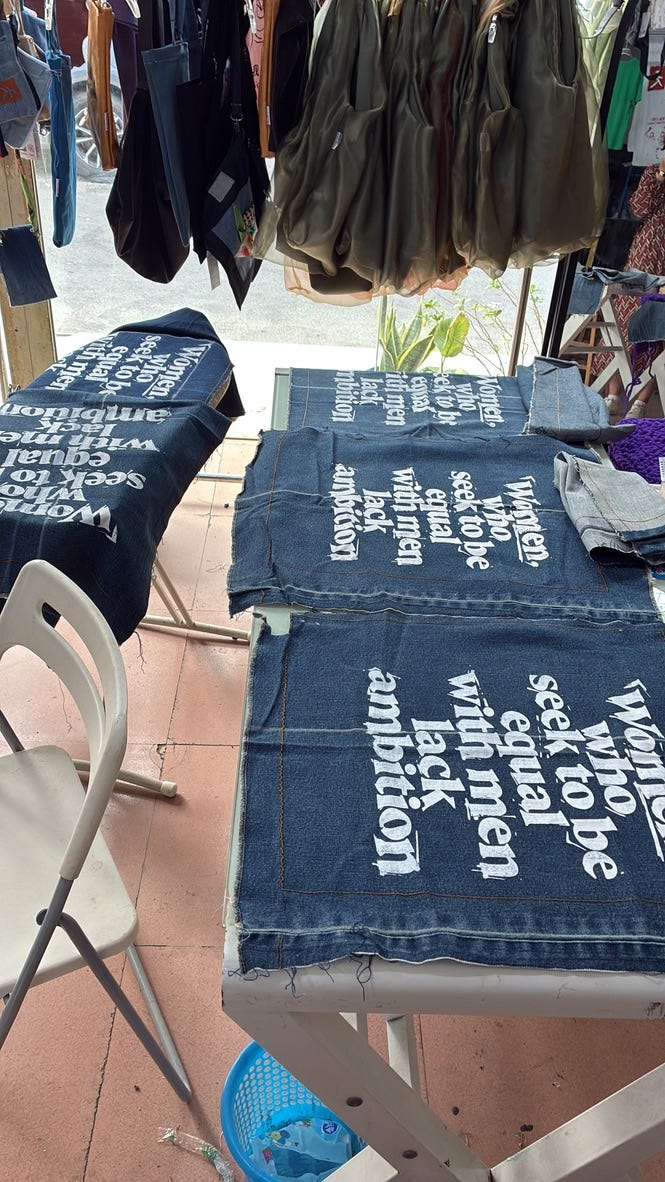
For a couple of days, I volunteered at a feminist migrant NGO, helping make tote bags out of waste denim donated by local factories. I’m not entirely sure the women I worked with knew quite how radical the message on those bags was.
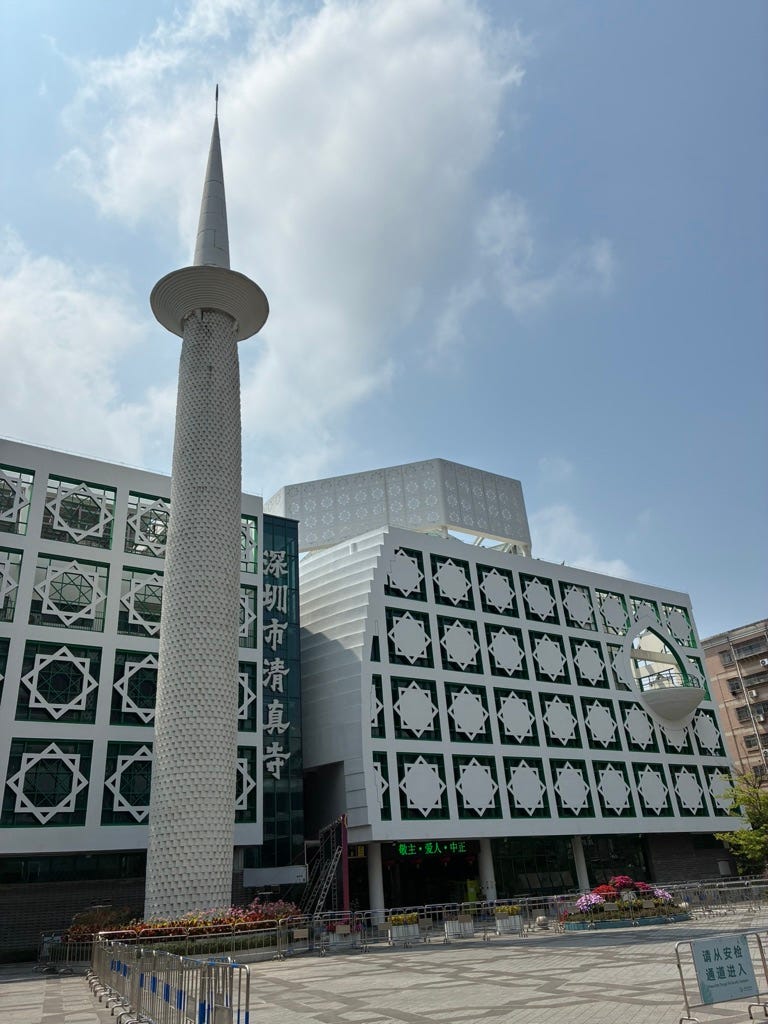
I also visited a mosque. It was quiet the day after Eid, and I found some of the kitchen staff resting after a busy month of serving the community. One of them had only been in Shenzhen a few months but was already plotting his return home. The congregation, from what I could gather, is largely made up of Hui Muslims and foreign visitors – traders from Pakistan and Saudi Arabia among them. One local Muslim mentioned that the dome had been covered up last year. You can just about make it out behind the barrier on the roof.
To round off the trip: a visit to Shenzhen’s Reform and Opening Exhibition, first opened in 2018 to mark forty years of reform in the city where it all began. The early rooms were essentially a shrine to Deng Xiaoping and Xi Zhongxun, who served as provincial party secretary at the time. Later rooms were dedicated to his son, Xi Jinping, with the emphasis shifting from free markets to China’s technological prowess.
And among the photographs on display: a young Xi, shadowing his father at work.
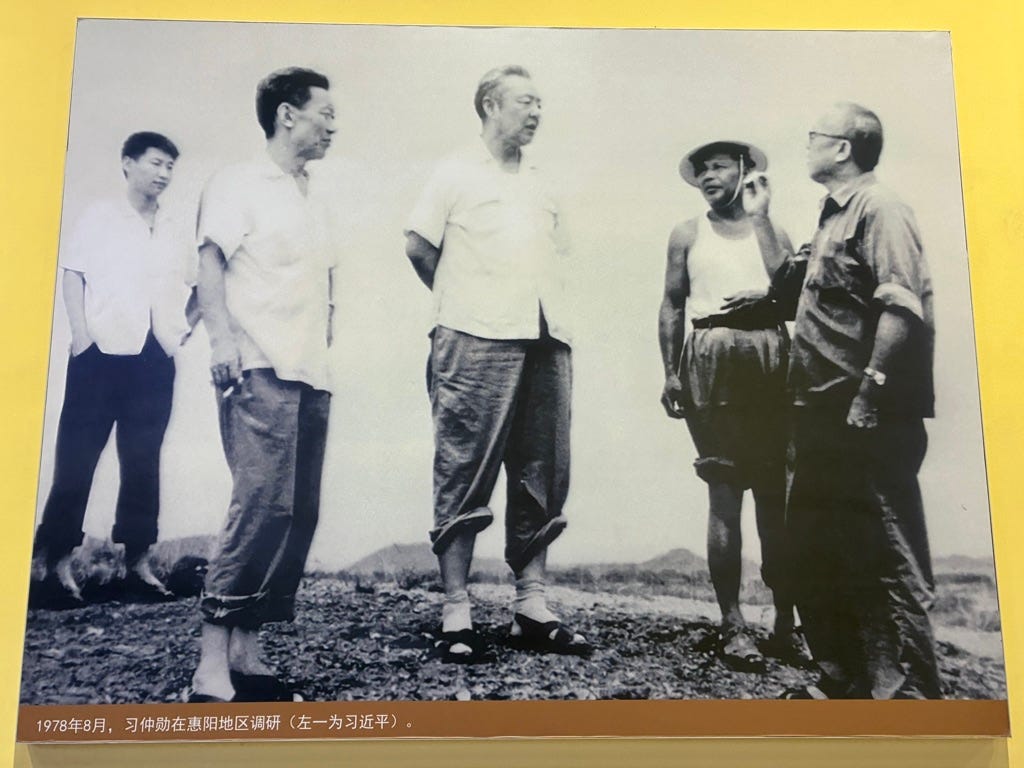
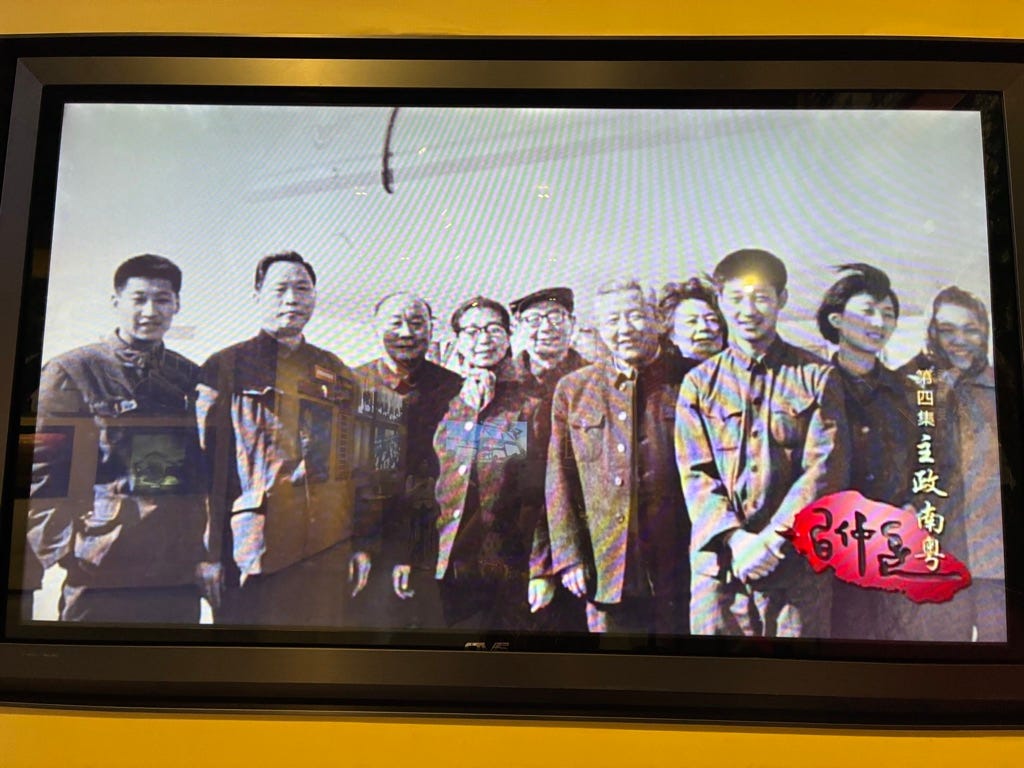
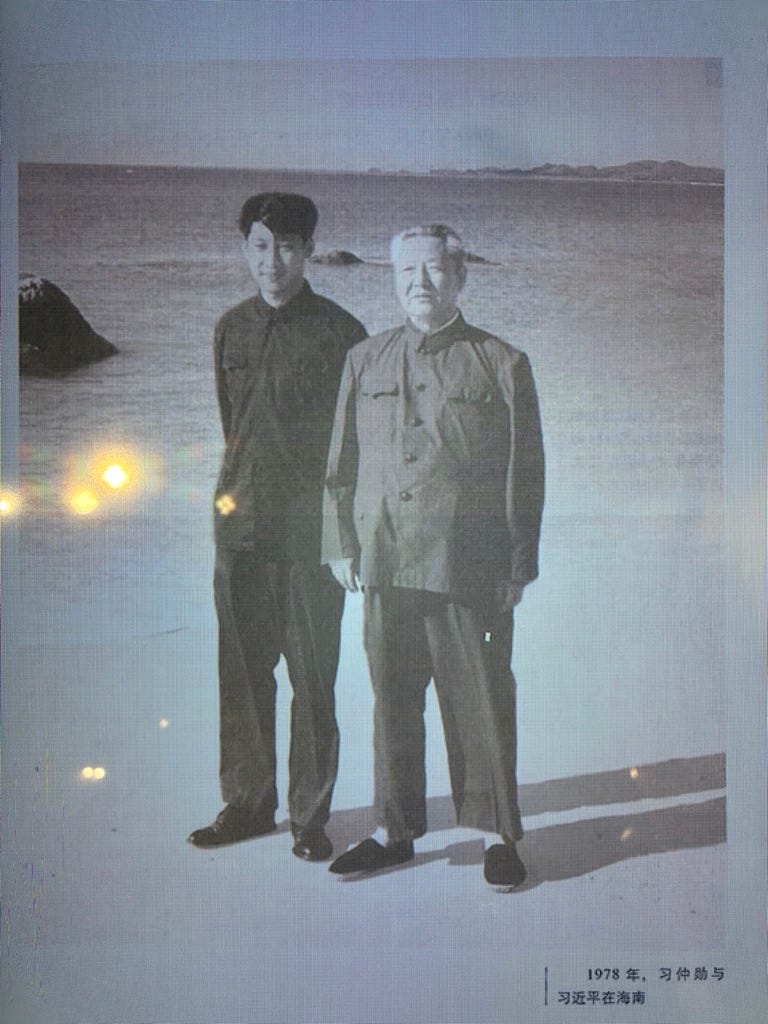
In the last picture dated 1978 XJP is already practicing his distinctive way of smiling in official photos.
Thanks for sharing your trip to Bishan and the wonderful photos. About your Time's AI column, I'm unsure what underpins your conclusion that AI uptake is inevitably similar to industrial revolution technologies. I think the analogy is more inapt than it is apt. We have the potential, maybe for the first time, to seriously consider the morality of our technology, i.e. AI, before it's widespread use. Questions about if and how AI sould be used are worth considering at the outset instead of a blind faith that it will all be okay down the road eventually. Leaving the moral heavy lifting to future generations seems a terrible abdication of responsibility.