

When you speak to Chinese people about what they consider to be Chinese values, often the word that comes up is li, 礼. You can roughly translate it as ‘etiquette’, but li really encompasses a whole host of duties and expectations that guide how each member of society should relate to each other. In modern, layman understanding, that translates to stipulations like a host’s warm treatment of his guests, even if they are enemies outside the house; or the way you navigate the world, tolerant of differences, broad-shouldered and open-minded enough to not be easily offended.
I’m hardly a Confucian but this is a genteel side of Chinese culture that I have always been proud of, and would like to identify with. So it is from this insider’s perspective, I guess, that I reacted to the recent cancellations on Japanese artists in China. My reaction is primarily one of embarrassment. This is not my China. I write about this in my latest column.
To recap: last month, Japan’s new Prime Minister Sanae Takaichi seemed to suggest that a blockade of Taiwan would satisfy the constitutional condition needed to activate Japan’s de facto army (‘a survival-threatening situation’). This is further than any of Takaichi’s predecessors had ever gone.
The Chinese reaction has been furious if predictable: tourists have been discouraged from visiting Japan, there has been a war of words on social media (including a very ill-advised comment from the Chinese consul-general in Osaka, who tweeted ‘the dirty head that sticks itself in must be cut off’), and Xi seems to have even complained to Trump on their phone call, as the latter then picked up the phone to Takaichi, reportedly to tell her to not provoke China more.
It’s with a grim kind of cynicism that I watch the descent of Sino-Japanese relations to their worst point in years, but when it came to the stories about what happened to Japanese artists in China, that cynicism changed to, as I say, embarrassment.
Dozens have had their concerts cancelled at the last minute. These cancellations are never carried out as an explicit ban from the government, but through, say, new and basically impossible stipulations from organisers. One singer, Maki Otsuki, even saw her mic cut out mid-song, the dimmed lights whacked back on, and ushered off stage.
When questioned about it, the Foreign Ministry spokesperson directed inquiries to local organisers. Beijing wants to retain plausible deniability, even though everyone knows the order comes from the top.
This is petty stuff. It’s not the China of li, or of magnanimity.
I know, I know, this is hardly out of character for China when it comes to geopolitical spats. But even that in and of itself – that for most westerners, a spiteful, vengeful Beijing is what they come across, the China of wolf warriors – is depressing. There’s so much more to the country and to a culture that sees respect as a core value.
Much more in the column, including who the real audience of these measures are. Do give it a read.
What I’ve been reading:
The End of the Longest Peace? (Graham Allison and James A. Winnefeld Jr in Foreign Affairs)
Very thought-provoking piece co-authored by the IR grandee Graham Allison, on how we can’t take the 80 years of peace since WWII for granted (appropriate given the current Sino-Japanese tensions). Allison and Winnefeld outline the structural reasons that the post-war peace is under strain. I was particularly struck by one: the relative fall in American economic influence:
At the end of World War II, when most other major economies had been destroyed, the United States had one-half of the world’s GDP; when the Cold War ended, the U.S. share had fallen to one-quarter. Today, the United States has only one-seventh.
Trump-style regime change in Venezuela (Edward Luce in the Financial Times)
Trump’s attempt at regime change in Venezuela, harking back to US foreign policy of the last century, is probably the most underrated/underreported foreign affairs event of recent months. It feels like a western blindspot to not properly engage with occasions when the West is the aggressor (no matter what you think of the rights and wrongs of the Venezuelan regime). Good for Luce for covering it, and analysing Trump’s haphazard way of going about it.
In Depth: Malaysia Becomes a Lynchpin in U.S.-Led Effort to Break China’s Grip on Rare Earths (Lu Yutong in Caixin Global)
An interesting long-ish read on the US’s rare earths diversification strategy, where each of Japan, Australia, and Malaysia bring something to the table in the task of creating an alternative supply chain to the Chinese dominated one.
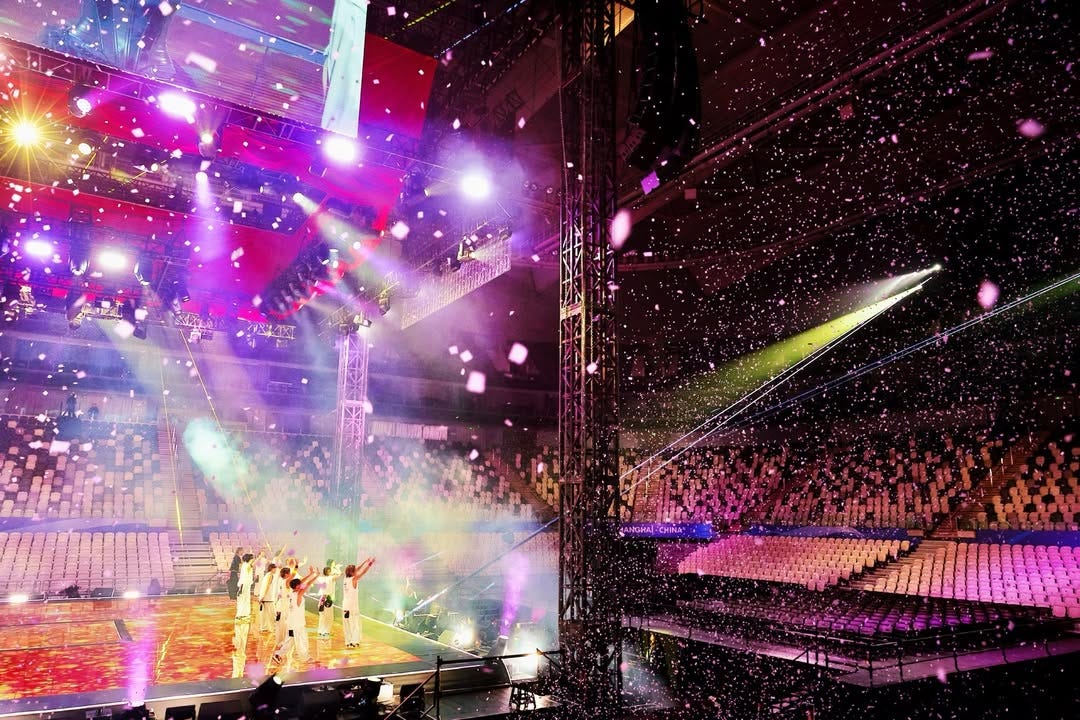
Picture this week has to be Japanese mega-star Ayumi Hamasaki and her dancers performing to an empty 14,000 seat stadium, after they were made to cancel their sold-out Shanghai concert. On Instagram, she thanked her Chinese and Japanese crew. This pop star has demonstrated more grace than the politicians who cancelled her show.
As luck would have it, immediately before reading this post I read Katja Hoyer's account of the State Banquet held at Windsor Castle for the German President Frank-Walter Steinmeier.
Here is an extract:
"And yet, for all the ceremony, what really struck me was the warm atmosphere. The German delegation — many of them seasoned veterans of state visits — seemed genuinely awed. I heard many murmurs of delight and appreciation for the way protocol had been turned into something very special."
Such affairs are well documented in the 'Book of Rites', of course. Strange irony that 禮 [lǐ] (pardon my use of the traditional form) is practised with such adroitness, and success, by the British royal family, yet so shockingly poorly by the officials of the Chinese government. Thank heavens that that the CCP remains wedded to the doctrines of the Legalists and not the Confucians. Should they ever learn the power of 禮, then China might really get to run the world. But then, in such an event China would be no threat to anyone:
“... when people from a distance are unwilling to yield to your influence and rule, improve your ways and cultivate your virtue in order to attract them. Once they are attracted to you, see to it that they are content.” (Analects 16.1; tr Annping Chin)
Communists don’t do etiquette.
Hence the boorish petty behaviour.
Japanese artists and performers should think twice about returning to China . Hong Kong maybe , but not the mainland .
Make Taiwan a cultural centre for Japanese arts .