

Recently a trending topic on Chinese social media has been about the 山姆打包哥, which I roughly translate as ‘Sam’s Club Takeaway Guy’. He is, probably, the most hated man in China right now.
Over the last few weeks, videos of a youngish Chongqing man beating his puppy went viral – neighbours had heard the dog screaming and the videos show them confronting him as a limp and bloody puppy hung from his hand. It’s horrible stuff, so click through at your own peril.
It turns out this guy has form – it wasn’t long before it transpired that he was a serial adopter of puppies, under pretence of being an animal lover, only to torture them to death when they get home. One puppy rescued from the corridors outside of his flat was found to have broken bones in multiple places, its tail chopped off and its teeth filed flat.
These horrific details are why the case has caused widespread contempt and disgust for the man, who is clearly mentally unwell. Because when these videos went viral, social media users quickly identified him as a man who’d previously gained Internet infamy.
A couple of years ago, he was filmed arguing with staff at Sam’s Club, a Walmart subsidiary membership-based shop that has found success in China, because he was eating endless free samples and had even taken a tupperware box to the shop to take the samples home (hence the title of 打包哥, ‘Takeaway Guy’). As I say, he is clearly mentally unwell.
These cases of animal abuse are, sadly, not unusual in China, but perhaps few are as emotive and graphic as this particular case. Whatever the reason, this was the moment that catalysed real public anger. First dozens, then hundreds, of people camped out in his residential compound: animal rights activists, millennial women with their beloved pooches and members of the Chongqing public. They camped out for days, demanding the police arrest him and rescue the puppies still in his flat.
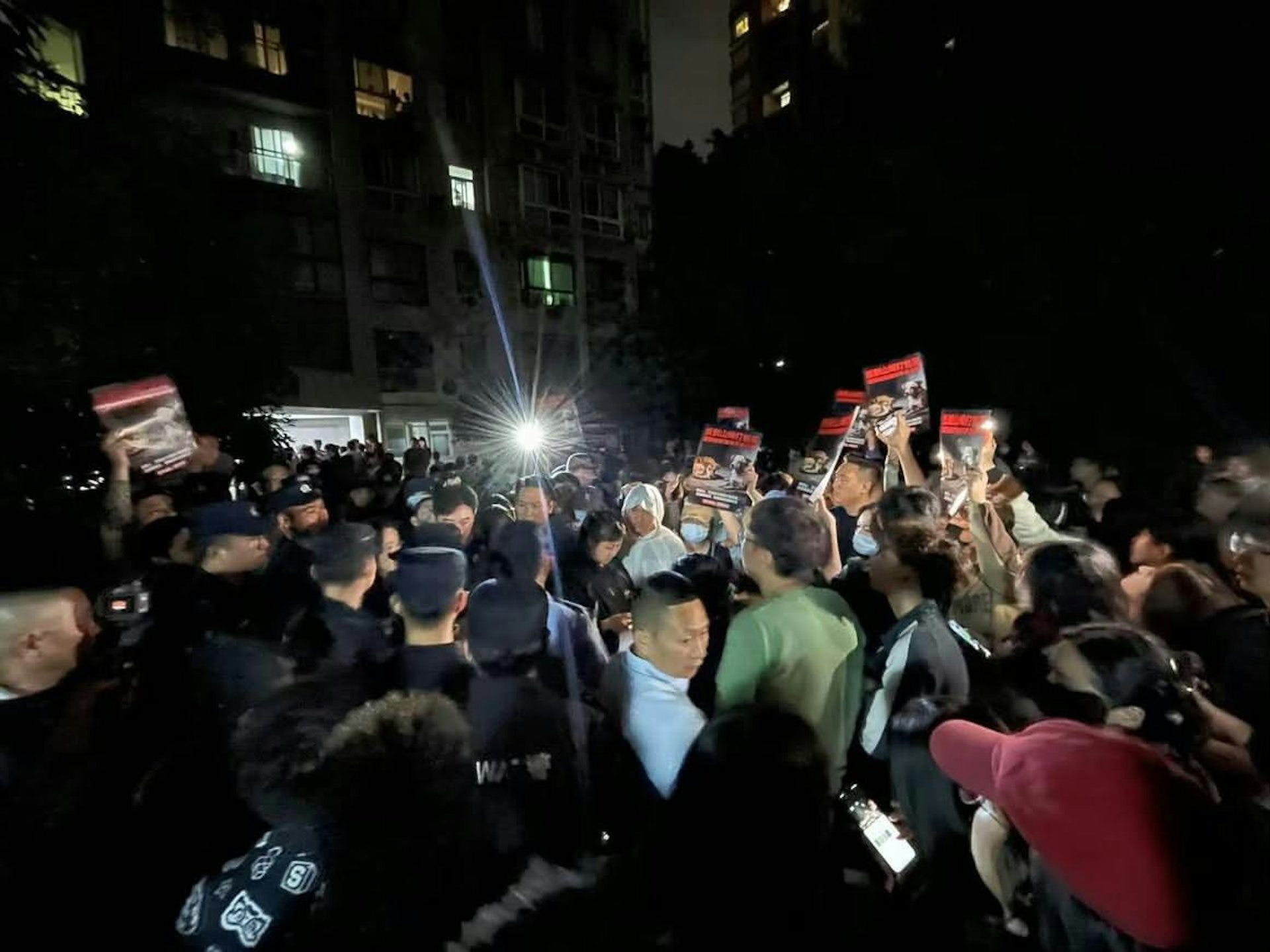
In fact, China is one of the few countries in the world to not have a nationwide, anti-cruelty law. The only thing that comes close is its Wildlife Protection Act, but that only protects wild animals from extinction, not from farming. There are even less protections for domestic or farm animals, which are generally considered property. So technically the Takeaway Guy hasn’t done anything illegal, the police told protestors.
On Wednesday last week, officers forcibly dispersed the protests, ending in clashes with the crowd where protestors were beaten up and detained. The sit-in had the hallmarks of an organised movement that could quickly become political. Social media has been largely scrubbed clean of the videos but they are still visible on Hong Kong media and on X (thanks to 李老师, Teacher Li).





To appease the protestors, the police also announced that they had detained the Takeaway Guy, though it was unclear on what legal grounds.
All of this feels like a milestone, though my natural pessimism tells me that law change won’t come anytime soon. In my latest column, I reflect on how animal welfare is similar to environmentalism – both causes requiring humanity to understand that it isn’t just humans that matter in this world, that the natural world or the animals around us aren’t just tools and resources. But in order to get to that stage, Chinese people had to get to a higher standard of living, which wasn’t just about survival. In other words, these are luxury causes that people only come to with a bit more breathing space in their material wellbeing – but we seem to be getting there now.
Do give it a read – not least for a darkly funny story about my mum’s childhood dog, who they named American Imperialism (美帝) for his size. Sadly, American Imperialism didn’t meet a happy end…
Further reading on the issue of animal welfare:
China’s pet economy being driven by elderly, singles dreaming of having cats and dogs – He Huifeng for SCMP
The Animal Protection Index report on China, from World Animal Protection
买来的宠物犬为何没活过一周?记者调查“星期宠”售卖乱象 ‘Why did my new puppy die within a week? Inside the murky trade in 'week-long pets' – Report from Chinese outlet Legal Daily on unscrupulous puppy breeding
Very good to see relatively modest protests in China does have significant political attention. Comparing this with other places where there is constant protests, maybe “more is less” impactful. Or perhaps in societies where people don’t or can’t protest, these protests gets right attention with actions to address the grievances.