

A few years ago, I contributed to the British broadcaster Iain Dale’s latest book, The Dictators, a collection of essays on the world’s most notable autocrats through history. I was assigned Xi Jinping, and wrote a 3,000 word biography of the man. I was reminded of this essay last week when I saw the Xi Zhongxun biographer Joseph Torigian refer to one of Xi Jinping’s most memorable quotes on politics, which I also used in the biography:
‘I look past the superficial things: the flowers and the glory and the applause. I see the detention houses, the fickleness of human relationships. I understand politics on a deeper level’
You probably know he is referring to his turbulent childhood and adolescence, from a pampered second red generation 红二代 to a teenager sent down to the countryside and living as a peasant for seven years, his father’s purge blacklisting the entire family.
As Joseph had used, it was a perfect encapsulation of how Xi might have felt about the pageantry that Trump put on for him in DC the week before last. I opened my latest column with it.
And for today’s post I thought I’d share the biography of Xi that I wrote for Iain in 2023, which most of you have probably not come across unless you have already got The Dictators at home.
I find Xi an incredibly compelling character. Why did someone, who suffered some of the worst of the Cultural Revolution, not get turned off of politics but repeatedly try to join the Party? Why has he revived strongman rule when even he must admit it was one of the main causes of that fraught era?
I reproduce the biography in full below. If you enjoy it, and don’t have the book, do have a look for the other essays on dozens of other autocrats – it’s coming up to Christmas…
Or if you don’t have time to read the whole thing, I also joined Iain on his podcast at the time, which you can listen to in full here.
Xi Jinping, a biography
Birth name: Xi Jinping
Date of birth: 15 June 1953
Place of birth: Beijing, China
Education: Chemical engineering at Tsinghua University
Married to: Ke Lingling (1979-1982); Peng Liyuan (1987-)
Children (with names): One daughter, Xi Mingze
Date of ascension to power: 15 November 2012
Most famous quotation: ‘Realising the great rejuvenation of the Chinese nation is the greatest dream for the Chinese nation in modern history’
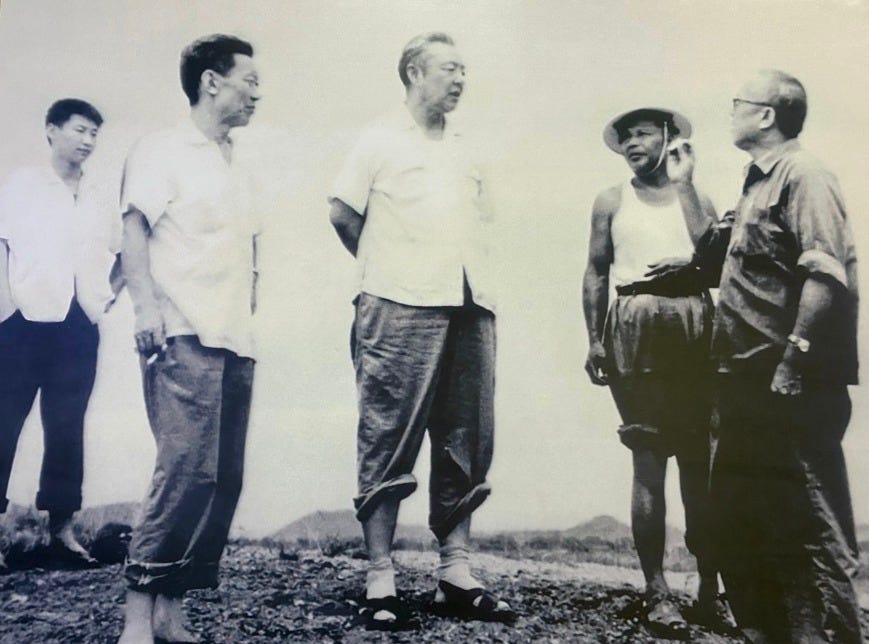
Xi Jinping was only nine years old when his father was banished. Xi Zhongxun, then vice-premier of the People’s Republic of China, was purged by Mao Zedong and sent to work in a tractor factory. His family was blacklisted, the children ostracised. At 15, Xi Jinping was exiled from Beijing himself, sent to one of China’s most desolate regions to do farmwork and other heavy labour for the next seven years. These events of one’s formative years are enough to turn anyone against the Chinese Communist Party. But not, it seems, Xi Jinping.
Six decades on, Xi is the most powerful general secretary that the CCP has seen in generations. In China, he has tightened the Party’s grip on civil society, religious minorities, political dissidents and private entrepreneurs, and revived a Maoist cult of personality around himself. Internationally, he has swung China’s weight around to bully and extort. Instead of pushing him away from authoritarianism, Xi’s early years taught him about power and steeled him for it. ‘I look past the superficial things: the flowers and the glory and the applause. I see the detention houses, the fickleness of human relationships. I understand politics on a deeper level’, he told an interviewer in 2000.
In some ways, politics was his inheritance. His father was one of the CCP’s earliest revolutionaries, joining a year after it was founded. Xi Jinping is therefore a princeling, what the Chinese call hong’erdai (Red Second Generation). When he was young, the family had nannies, a cook and a driver who chauffeured them around Beijing in a Russian-made car. The children were sent to the capital’s best schools, where they mingled with other princelings. At home, Xi Zhongxun would talk to his children about the Communist revolution ‘so much that our ears got calluses’, Xi Jinping recounted later; while his mother, Qi Xin, worked at the Central Party School. They were a red family through and through.
But disaster struck in 1962. Xi Zhongxun was purged for supporting the publication of a novel that was supposedly a veiled criticism of Mao. He was banished from Beijing while Qi Xin and their four young children were shunned, their privileges stripped. When Mao began the Cultural Revolution in 1966, the family was a prime target of the teenage Red Guards. Their home was ransacked and they were forced to denounce Xi Zhongxun in ‘struggle sessions’, public spectacles of psychological and physical torture by mob, characteristic of the Cultural Revolution.
When Mao had had enough of the havoc caused by teenage Red Guards in his name, he sent millions of young people from the cities to the countryside, ostensibly to teach them about the hardships of China’s farmers and peasants, but it was a scheme that opened up widespread abuse of teenagers isolated from their parents and teachers. 15 year old Xi was one of the youngest to be sent and, possibly because of family string-pulling, sent to a village in the northwestern province of Shaanxi, near Inner Mongolia, where his father had spent years as a guerilla fighter for the CCP.
But though the locals remembered Xi Zhongxun fondly, rural life in the village of Liangjiahe was harsh for the teenager. He was flea ridden, fed on coarse grains (the only thing locals had) and subjected to hard manual labour (he later called these the ‘four great tests’, with the additional ‘psychological barrier’ - ‘I absorbed the farmers’ down to earth, hardworking spirit, and they gradually accepted me as one of their own’). He made a failed escape attempt after a few months, but would stay for seven more years. (The Sinologist Michel Bonnin later dubbed the sent-down youths ‘the lost generation’, for missing out years of education.)
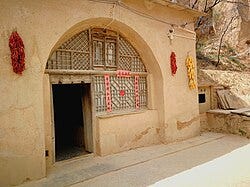
Today, Xi’s Cultural Revolution experience forms part of his personal myth. To compensate for his privileged background, the cult of Xi cultivates the image of a peasant emperor, someone who has seen, and felt, the plight of the poorest in the country. Liangjiahe is now a tourist spot with tens of thousands of visitors a day, a visitor centre and young attractive tour guides, who will tell you that the teenage Xi turned up with a heavy suitcase of books, and studied late into the night under a dim light. Or that he turned down a motorbike, a reward for good work, and asked for two corn grinding machines for the village instead. There’s much about the legend of those years that need to be taken with a large pinch of salt.
Nevertheless, even accounting for propagandistic licence, these are brutal formative years for anyone. His family was scattered, except for his youngest brother and mother, who were allowed to stay together but were sent to a work camp. Xi’s half sister, from his father’s first marriage, likely committed suicide as a result of the political persecution.
Xi was always defiant against his father’s critics: ‘At a time when society was calling us brats and rascals, I always firmly believed that my father was a great hero, a father most worthy of our pride’, he later wrote in a letter to his father. One can only imagine how he felt, then, when he was made to recite criticism against his father published in national newspapers as a part of the daily struggle sessions in Liangjiahe.
Yet it was also here that Xi first joined the Communist Youth League, and then the Chinese Communist Party itself, despite being rejected numerous times because of his blacklisted father. According to an US diplomatic cable, published by Wikileaks, a contemporary of Xi’s from this time called his attempts to join the Party a ‘betrayal’. Others turned to western music, drinking, reading - hedonistic pursuits to make up for lost youth. But why not Xi?
Xi’s contemporary concluded that Xi’s princeling breeding inculcated a sense of entitlement in the man, even from childhood - a feeling of self-importance that was grander than mere narcissism. This crystallised into a belief that, not only was he destined to rule China, but that he was better than the alternatives. ‘The more good people there are in the Party, the fewer bad people there will be’, Xi wrote in 1998 when recounting those years.
Whatever his real drive, Xi’s pedigree ensured that he was on the path to success after the Cultural Revolution, which ended with Mao’s death in September 1976. The purged were rehabilitated, if they were still alive, including Xi’s father. Xi Jinping returned to Beijing to study at the elite Tsinghua University, after which Xi Zhongxun secured him a plummy first job as the secretary to an old ally who was now the head of the Central Military Commission, the Party’s national defense wing.
After three years, Xi Jinping made a gamble - he left Beijing to cut his teeth in China’s regions. Promotion would have been assured had he stayed in Beijing, but he risked being pigeonholed into military roles. Xi became a minor official in a county in Hebei province, then spent 17 years in the coastal Fujian province (eventually as governor), before being promoted to party secretary of wealthy Zhejiang province, one of China’s most important regional posts, in 2002.
Decades of climbing regional posts allowed him to gain a reputation as a reliable, competent administrator in the eyes of the senior leadership in Beijing; it also shielded him from the most dangerous of Chinese politics - Beijing in the years after Mao died was a constant battle between the conservatives and the liberals in the Party, as the country came to a crossroads over its economic future. In 1987, Xi Zhongxun lost his last power struggle as he supported liberals on the Politburo - he was allowed to quietly retire in Shenzhen, the coastal city that was fast becoming a success story of China’s reform and opening, until he died in 2002.
During these years, Xi Jinping was on the frontline of China’s economic liberalisation. As governor of Fujian, the province closest to Taiwan (separated by a sea about the same width as the English Channel), Xi courted Taiwanese investment and helped American companies resolve local disputes. In Zhejiang, one of China’s wealthiest provinces, Xi propped up the only local carmaker with business-friendly policies. Less than a decade later, Geely made headlines internationally for acquiring Swedish-brand Volvo. It’s now one of China’s biggest car manufacturers.
It was at this time that Xi started building a close core of allies, all men he has personally worked with. Li Qiang, his chief of staff of three years at Zhejiang, now premier of China; Cai Qi, a city party secretary under Xi, now the First Secretary of the CCP Secretariat; and Chen Min’er, Xi’s propaganda chief in the province, now Party Secretary of Chongqing, one of the most high profile regional roles. Chinese commentators dub Xi’s Zhejiang allies ‘the New Zhijiang Army’, or more simply ‘Xi’s clan’.
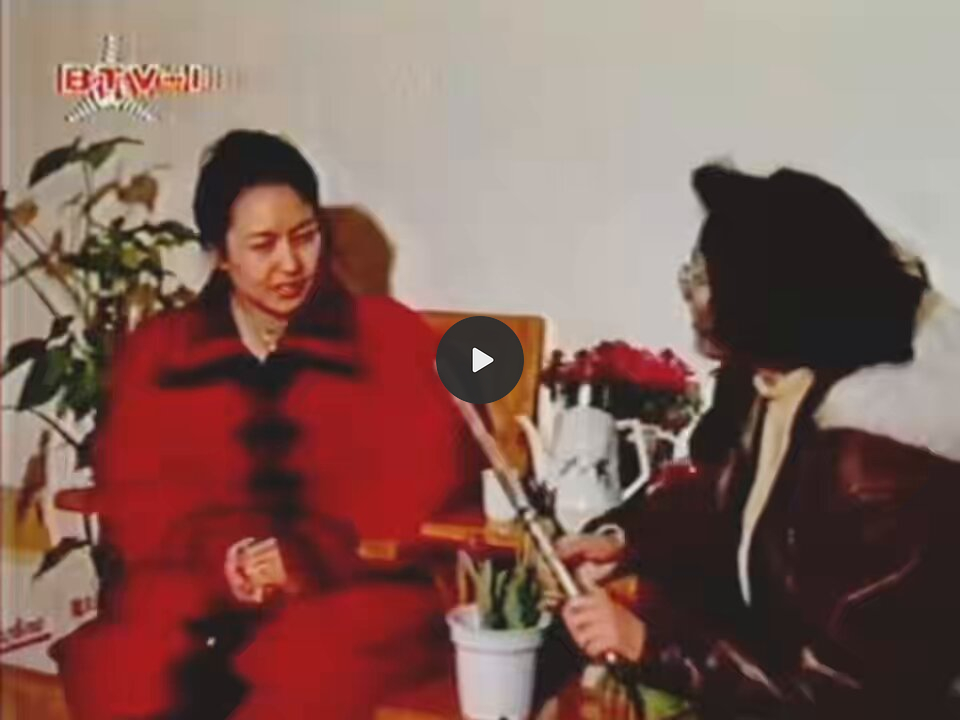
Xi was getting noticed as a rising star and a steady hand. In a heady time when Communist cadres abused their political power to skim some cream off the huge profits flooding into the newly liberalised economy, Xi Jinping had a reputation for being straight-laced. When a huge corruption scandal broke out in Fujian under his governorship, Xi was one of the only senior officials not to be implicated. This may have been clever politicking, but those who know him also reflect an image of a quiet and cautious (if boring) man - ‘There was nothing flashy about him’, one of them told the Toronto Star later. And though his wife was a popular PLA singer, they were an understated and inoffensive couple. (Indeed, for years, he was known as ‘Peng Liyuan’s husband’, standing dutifully to the side as she signed autographs)
[Below, an incredible interview with Peng at home, from the 1990s, in which Xi makes an appearance as a side character]

This might be why, when a 2007 corruption scandal in Shanghai took down the party secretary there and risked implicating former Chinese president Jiang Zemin, the Party’s leadership looked to Xi to steady the ship. He was clean enough to placate the public’s fury at corrupt officials, but diffident enough to not alienate Jiang, who remained powerful behind closed doors and lost some proteges to the scandal. Xi was moved from neighbouring Zhejiang to become Shanghai party secretary, now on the fast track to CCP leadership.
At the National Party Congress that October, he emerged as the likely successor to Hu Jintao, then-President. It was a surprise move, and upset some within the Party. Many didn’t know him and some questioned how such a mediocre man could have secured the top job. Probably Xi was seen as a candidate who could work with both the Hu and Jiang factions (the President and his predecessor were constantly vying for power) and, possibly, as a relatively pliable man who could be steered. They’d quickly be proven wrong once Xi took the reins from Hu in 2012.
Before then, the Party put Xi through a kind of leadership apprenticeship for five years. He became vice-president, a foreign-facing role which saw him trotted out on the world stage to meet many of the leaders he’d later do business with. He was also given oversight of the Beijing Olympics preparations, which was probably his first serious scrape with a sceptical western media, an experience which may have moulded the assertiveness of his approach to foreign policy later.
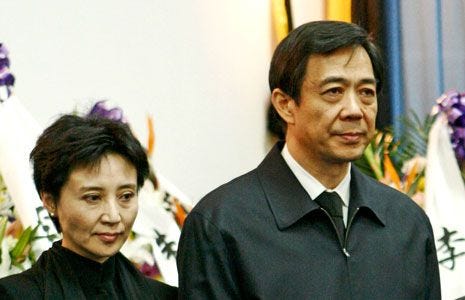
But for any semblance of orderliness that this lengthy lead-up may have given to the succession, the events leading up to Xi’s eventual ascension in 2012 were worthy of a Hollywood blockbuster. In February that year, the chief of police in the city of Chongqing, Wang Lijun, fled to the US embassy, confessing that a British businessman had been murdered by the local party secretary’s wife three months previously, and that he, Wang, had helped cover it up. The scandal broke the lid on elite politics and, though he didn’t seem to be involved in the murder itself, the Chongqing party secretary Bo Xilai was ousted on corruption charges. The good looking Bo had been seen as one of China’s most charismatic politicians and capable of challenging Xi to become leader, a shoo-in for the Politburo Standing Committee, China’s top political body. Instead, he ended the year in jail.
Also in 2012, a 23-year old princeling, the son of a senior aide to President Hu Jintao, died in a Ferrari crash in Beijing (he reportedly had two naked female passengers, who fortunately survived); and the New York Times published a detailed expose of the family wealth collated by the family of then-premier Wen Jiabao. Set against this backdrop of sex, murder and widespread corruption, Xi himself disappeared for a fortnight in September, cancelling a meeting with then-US Secretary of State Hillary Clinton.
Some China watchers say that Xi went on strike, that Party elders had asked him to stay off any radical personnel or policy moves when he took power, given the turbulence, but that Xi refused. It seemed like he won. On 15 November 2012, Xi was the first of seven men walking on stage at the Great Hall of the People - the new Politburo Standing Committee, led by the new CCP General Secretary. Almost immediately, he began a wide-ranging anti-corruption campaign, fuelled by the year’s headlines of elite graft.
He felled a number of big beasts, including Ling Jihua, the presidential aide whose son died in the Ferrari crash, and Zhou Yongkang, who sat on the Politburo Standing Committee until that year. In total, over two million officials were prosecuted, including hundreds ranked at vice-minister or vice-governor level or above. Observers had put Xi’s quietness down to mediocrity or meekness; but it turns out it was ruthlessness.
China of the early 2010s was a different beast to the one his father had fought for, or even the one that he himself had been a regional politician in. Economic reforms had lifted 700 million out of poverty in the previous four decades, but by the early 2010s, the economy was slowing and at risk of falling into the middle income trap. The Arab Spring, a year earlier, spooked the Chinese leadership, which became paranoid about ‘colour revolutions’ fomented by Western intelligence services across the world.
At home, the Chinese public was obsessed but repulsed by the high level corruption scandals, air pollution was causing hundreds of thousands of deaths a year, and the Internet’s prevalence allowed critically minded citizens to share their thoughts en masse with hundreds of thousands of others. The most important thing, from the perspective of the CCP loyalist Xi now was, was to stabilise the country. Corruption threatened the Party’s legitimacy in the eyes of the public and emptied state coffers, so it had to be tackled first.
The anti-corruption campaign also gave Xi a chance to decimate engrained factions within the Party and establish his own power. (Jiang and Hu’s factions, so obsessed with the power games for years, were quickly proven wrong in their assessment of Xi’s pliability.) In 2017, instead of appointing his own successor, Xi did away with the convention of term limits (set by Deng Xiaoping to prevent another Mao Zedong) allowing him to begin a third term as Chinese leader in 2022. Today, the Standing Committee is packed with his own allies, few with enough personality or power base of their own. He also chairs a number of policy committees within the Party, giving him oversight on issues ranging from economic and social reforms to military restructuring and the Taiwan question.
For a time, Chinese state media endearingly dubbed him Xi dada, or ‘Papa Xi’, as the Party revived a cult of personality. Cadres are forced to study ‘Xi Jinping Thought’ ad nauseum (the curriculum was even digitised into an app). In reality, it’s difficult to cultivate a cult around a wooden personality shielded from the public, but these moves signalled a change in the wind in Chinese politics, a return to the Maoist playbook. His critics, if they existed, were effectively ousted or silenced.
At the same time, civil society was being yoked tighter to prevent an Arab Spring unfolding in China. This process began before he took power, but intensified under Xi. Social media, academia, activism, and the private sector have all been placed under tighter control. Dissent at China’s demographic margins, such as from the Uighur Muslims in Xinjiang or the pro-democracy activists in Hong Kong, has been unrelentingly and systematically crushed. Far from being a reform minded pragmatist, like his father was, General Secretary Xi Jinping is on a mission to make China great again.
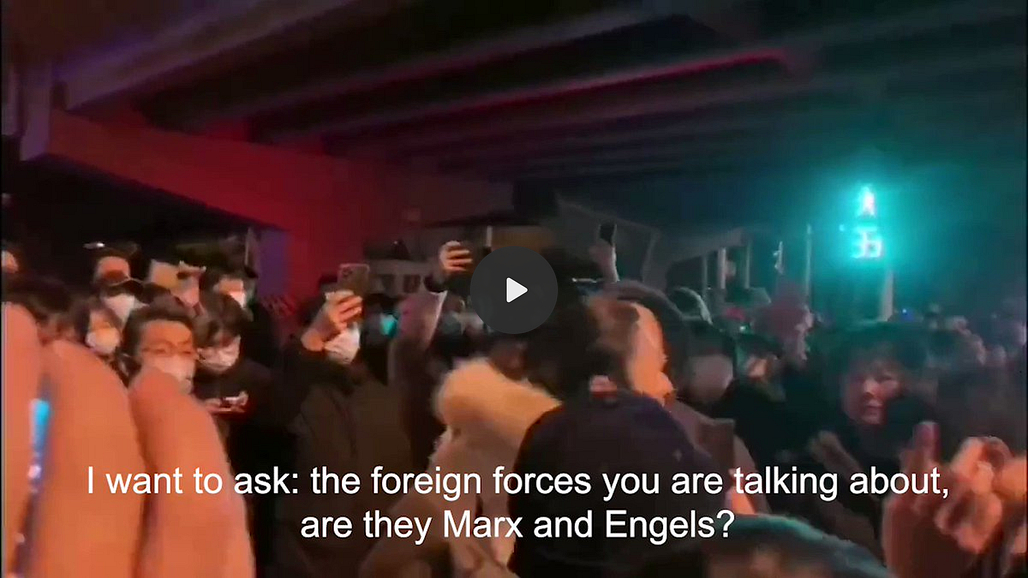
From early 2020, the Covid-19 pandemic gave new shape to government control. Having initially lost control of the virus in Wuhan, the Party overcompensated by installing the strictest lockdown procedures seen anywhere in the world. The infected were carted off to centralised facilities as neighbourhoods, and sometimes entire cities, were shut down. Zero Covid was ‘scientific and effective’, Xi said in May 2022, and officials must ‘unswervingly adhere’ to it. But it was a losing game of whack-a-mole - Omicron pushed the public health response to the brink and by December that year, the policy was finally ended after young people across multiple cities took to the streets to protest.


Outside of China, Xi’s strong hand has translated to an assertive foreign policy. After 1989, when the Party’s deadly crackdown of student protestors in Tiananmen caused international backlash, the CCP had tried to exercise an inoffensive ‘we come in peace’ approach to the world, so that China might continue developing without drawing unwanted international scrutiny. But Xi ended that with ‘Xi Jinping Thought on Diplomacy’ which translated, on the ground, into wolf warrior diplomacy and the trillion-dollar worth Belt and Road Initiative, which is meant to expand Chinese economic, cultural and possibly military influence across the world.
Those who value democracy would, of course, think little of Xi’s abilities and record, but what about those more sympathetic to his aims, such as the average Chinese person or those within the CCP itself? Under Xi Jinping, the Chinese economy has continued to shift from low-value manufactured goods to high tech industries like renewables and semiconductors. It also continues to grow, at around 5 per cent each year, pandemic aside. The Party claims to have eradicated poverty within China, while the one child policy has been loosened to three children and an expansive high-speed rail network covers the length and breadth of the country. Corruption and pollution have been relatively neutralised as domestic grievances, and globally, the Belt and Road Initiative has participants representing 75 per cent of the global population and more than half of the world’s GDP.
But even from a sympathetic perspective, Xi’s record is mixed at best. The crackdown on the private sector has spooked investors (who, in Q3 2023, for the first time since records began in 1998, took more money out of the country than in). After three years of on-off lockdowns, youth unemployment is at record highs (at least before they stopped publishing the stat). The West has become more alert to the challenge from China, goaded by wolf warrior diplomacy, while poor delivery of Belt and Road projects has created as many local critics of the scheme as there are supporters. Finally, Xi’s systemic incarceration of hundreds of thousands of Uighur Muslims, the suffocation of Hong Kong’s democratic rights (contrary to prior promises) and the pandemic itself have turned public opinion against China, at least in the West. Before 2012, Xi seemed to be a cautious and understated man. But has he now been infected by hubris after years of being at the top?
The Xi story continues. In 2024, he will be 71, well past the retirement age that a previous era had dictated for Communist officials. With no set date for stepping down, nor an obvious successor, Papa Xi could lead the country for many more years. Will there be more missteps and hubris? Nobody could say for sure, but one thing is already clear: decades after his father was purged by Mao Zedong, Xi Jinping now resembles the ageing dictator more than the father he hero-worshipped.