

Allow me to start with an apology for being away from your inboxes for so long. I have just been in Mexico for three weeks, visiting Mexico City, Oaxaca, and the mountains and beaches outside it. I learned a lot about Aztec history and the lives of indigenous peoples in the country now, and found some striking similarities in native myths and practices to Chinese myths and traditional medicine. I might write about that at some point.
But it has been a whirlwind return to work – thanks Jensen!
For readers who have been under a rock for the last few weeks, the co-founder and CEO of Nvidia, the world’s leading chip designer, Jensen Huang, has had to resign after a series of affairs came to light, including one with a Chinese national suspected by some in American intelligence to have links to China’s spy agency, the Ministry of State Security, who also happens to be the head of one of Nvidia’s client companies, Megaspeed.
I’ve been covering this event for The Times, and there has been a lot to write about. I’ve been particularly interested in the genealogy of this event – how we got to this point – and what happens next. At the bottom of this Substack is my timeline of events, which I found helpful to put together for my understanding of the case. It’s cobbled from various reporting so it is rough and by no means comprehensive.
My column yesterday looks at how Huang’s defenestration is – contrary to some commentary – actually not good for China. As one of the main advocates for looser chips controls to China, and potentially having turned a blind eye to chips smuggling via client companies located in third countries, like Alice Huang’s, his downfall will now open up Washington DC for a tide of tighter restrictions on the ways in which chips get into China, legally and illegally. Indeed, after my column came out, Trump announced new rules to restrict Chinese firms from being able to remotely access data centres in third countries that run on banned Nvidia chips. This had been an obvious loophole previously left open.
I didn’t have space for this in the column, but Huang was also the leading Silicon Valley voice promoting open weights models, the kind that Chinese labs put out (I wrote about it before here). This has set him against those more hawkish elements in Silicon Valley, like Anthropic’s Dario Amodei. So China also loses a champion in that area.
But what I’ve also found fascinating is the way the espionage allegation has played out in this instance. From the first reports by the New York Times and others of unnamed intelligence sources accusing Alice Huang of having links to the MSS, over the last week, Attorney General Todd Blanche, FBI Director Kash Patel, and President Donald Trump have been among those to say, on the record, that they ‘don’t know’ if Alice Huang is a spy. Trump went even further yesterday, saying:
Usually what happens with that is that any woman coming from the country that’s a beautiful woman coming from China, they say she’s a spy. I don’t know that she was a spy at all.

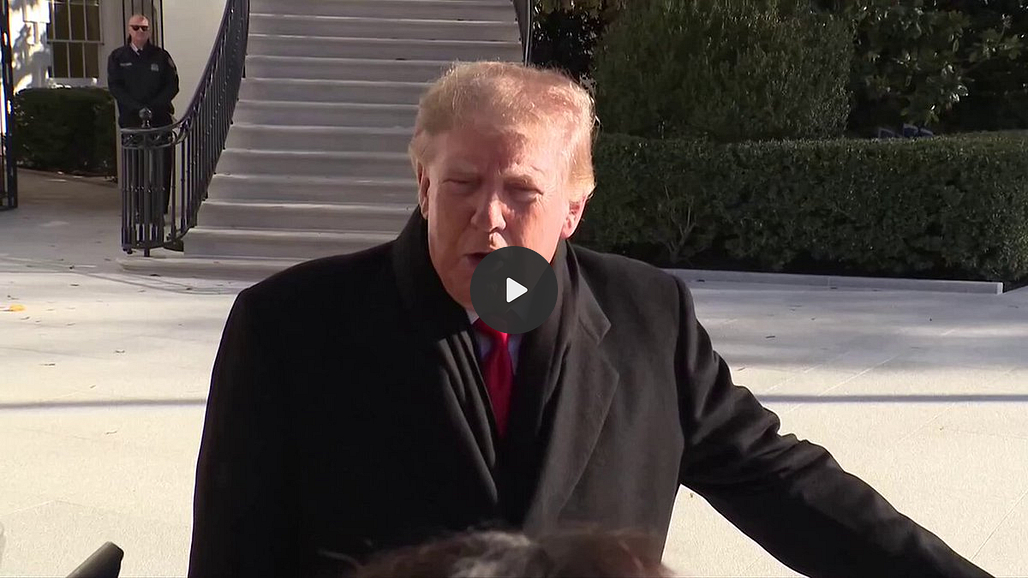
Another classic from Trump, and on this one I feel it quite personally, having also been accused of being a spy. Am I beautiful? Perhaps my accusers think so.
But more seriously, the espionage claim seems to have seriously weakened in recent days, with Jensen Huang’s critics now saying it’s never been about espionage, but always been about how much JH stood in the way of tighter export controls and may have even allowed smuggling under his watch. That seems to me to be a moving of the goalposts, as if it weren’t for the salacious espionage allegation mixed in when the story first broke, the reputational damage to JH would have been much less. He might have even survived – he wouldn’t be the first Silicon Valley boss to have affairs with close reports.
(If you are in any doubt about that, consider the fact that the New York Times first reported on Megaspeed and a personal relationship between JH and AH in October 2025, but it wasn’t until the spy element appeared in the reporting of October 2026 that the story snowballed.)
On Thursday, I wrote a shorter column reminding people that we were jumping to conclusions (as we tend to do whenever the label ‘spy’ is thrown out) and that we really know very little about the evidence against Alice Huang.
(In fact, under the radar this week because of the bigger news elsewhere is Chris Cash’s interview with the BBC – he was the parliamentary researcher accused of being a spy for China, whose case was dropped last year, remember? The BBC talks to him having seen the thousands of WhatsApp messages he shared with Christopher Berry. I’ve got a lot of thoughts on it but suffice to say that the headline thought is: he was a massive idiot, but no spy. His entire case is a cautionary tale for us not to jump to conclusions whenever the ‘S’ word is used.)
So I’m sympathetic to those allies of Huang’s who believe there’s been a political hitjob – the espionage allegations seem too weak, and haven’t even sustained a week of questioning and received no high-level, on the record backing; JH clearly made many enemies with his views; and his departure benefits those on the opposite camp. The Washington Post reports on Marco Rubio’s role in the series of events that led to today.
Rubio issued a memo warning Trump about the relationship between Huang and a suspected Chinese spy, based on a report generated by the CIA, according to a person familiar with the matter. Rubio used the CIA report to write his own, recasting the agency’s reporting in his own more assertive terms, the person said, speaking on the condition of anonymity to describe confidential intelligence.
What happens now? There’s a growing petition for Huang to be reinstated, and he has powerful friends in the form of Elon Musk, Trump’s former AI tsar David Sacks, and of course the President himself. But he is also due to answer questions in front of Congress next month. Unless he is totally and utterly purer than white on the questions they will ask him – e.g. on whether a romantic relationship with Alice Huang impacted his business dealings with Megaspeed, on whether Nvidia asked enough questions of where their chips were ending up – and provided AH really isn’t a spy, then he will continue to be vulnerable. Would the company really feel confident enough to bring him back under those circumstances?
The Timeline
2023
Alice Huang becomes managing director of Megaspeed, renamed from 7Road International.
The first known photograph of Alice Huang with Jensen Huang, at dinner in an Italian restaurant in Singapore. (AH is in the white top in the background).

2024
The US Commerce Department starts to investigate Megaspeed, the company that Alice Huang ran, as part of a broader probe into an ecosystem of foreign shell companies suspected of diverting restricted Nvidia chips into China.
End of year filings from Megaspeed show that the company’s assets rose from $33 million in 2023 to $3 billion in 2024.
2025
Singapore begins investigating Megaspeed for suspected false declarations connected with server purchases.
Commerce Department investigators receive an email from Nvidia’s general counsel, Tim Teter, seeking information about the inquiry. Teter said that Jeff Kessler, a top official at the department nominated by President Trump and who reports directly to Commerce Secretary Howard Lutnick, gave him the permission to reach out. The investigation was abruptly halted and transferred to the Justice Department for fear it had been compromised at Commerce.
As a result of the investigation, at some point the National Security Agency begins monitoring Alice Huang’s communications. In this process, they come across an American national who is in a romantic relationship with Huang. American nationals implicated in these intelligence operations are usually ‘masked’ (identities hidden) but a high-level decision was made to ‘unmask’ the individual. This turned out to be Jensen Huang.
The President allegedly receives a briefing from US intelligence about the affair in October.
In the same month, the New York Times reports that the US and Singapore are both investigating Megaspeed, and that AH and JH ‘socialized’.
In December, Trump allows Nvidia to sell the more powerful H200 chips to China, proposing a 25 per cent kickback for the US government.
2026
Analysis by Culper Research suggests that Megaspeed’s Malaysian subsidiary imported around $4 billion of Nvidia-related equipment between 2024 and 2026.
Early in the year, Singapore bars Alice Huang from entering the country for providing inaccurate information for its investigation into Megaspeed. The government has clarified she was not investigated or punished for espionage.
In May, on Air Force One en route to China, Marco Rubio briefs Trump on his own version of an intelligence memo, the conclusion of which is that JH is in a relationship with a suspected Chinese intelligence asset. Not initially included in the CEOs joining the trip, Air Force One picks up JH in Alaska.
In October, the New York Times goes further than its reporting from the year before, and says that US officials suspect JH to be the target of a Chinese intelligence operation involving AH, and that the two had a ‘close’ relationship.
And you know the rest…
One more thing
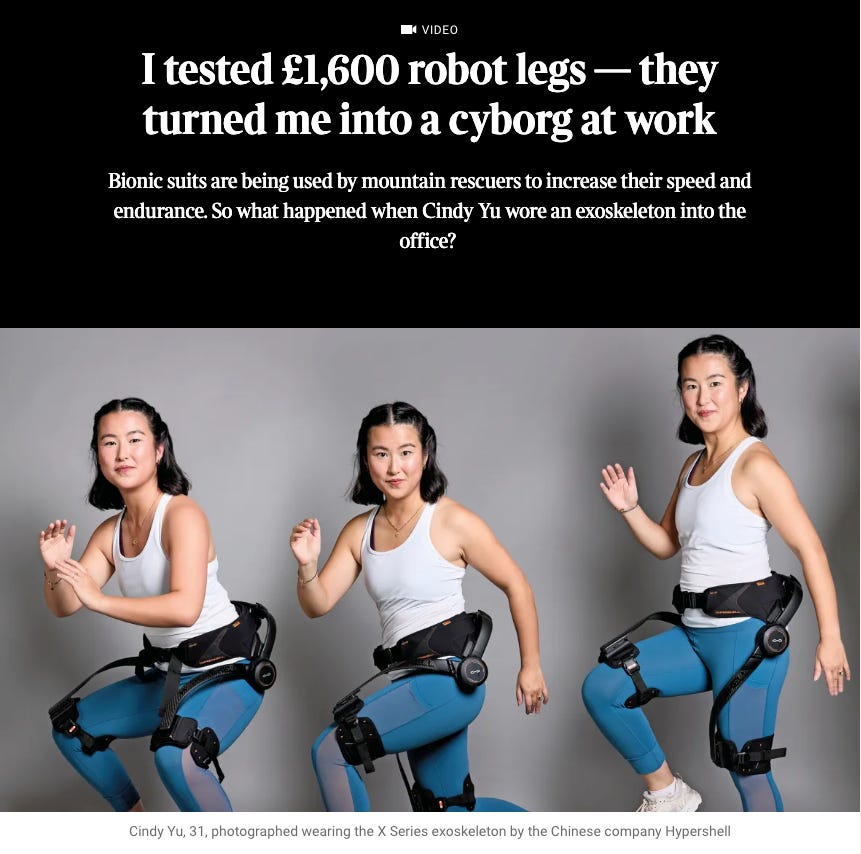
I also just wanted to share something else I’ve been working on, which came out over the weekend. It’s a feature for Times Magazine on Chinese robotics, specifically, I tried out an exoskeleton made by Shenzhen-based company Hypershell. Mostly a bit of fun, and an opportunity for my editor to snap cheesy photos of me as a cyborg. Do give it a read.
It would be useful to know who in the Trump administration and Techbro echelons is now considered a China hawk or dove, and if this particular hit job on JH has revealed new names under those columns.