

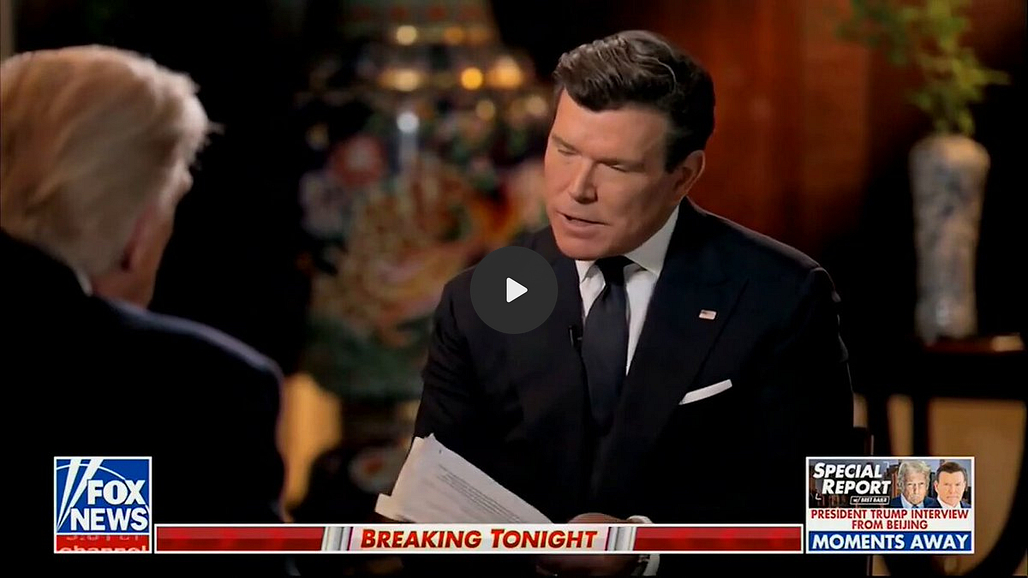
‘We’re supposed to travel 9,500 miles to fight a war?’
That was Donald Trump’s retort to Fox News’s Bret Baier when Baier asked him whether the US would help defend Taiwan in the event of war. It didn’t sound exactly supportive of Taipei.
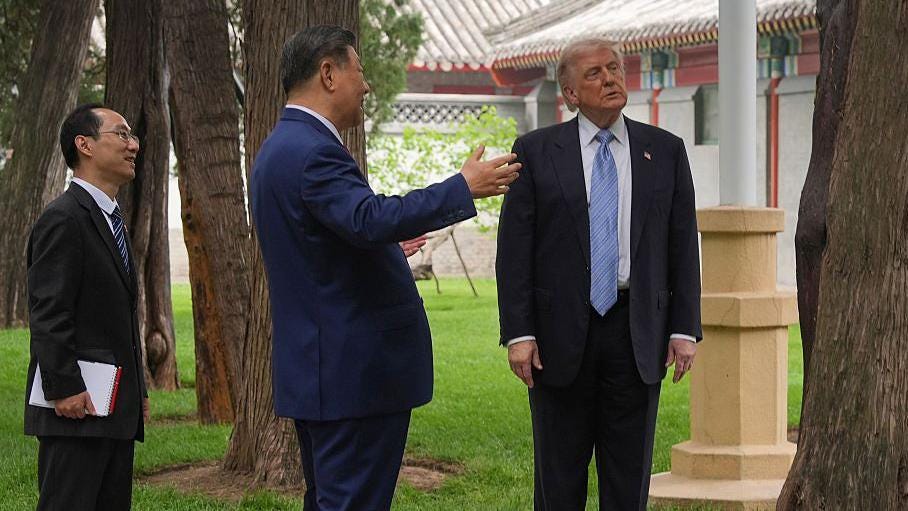
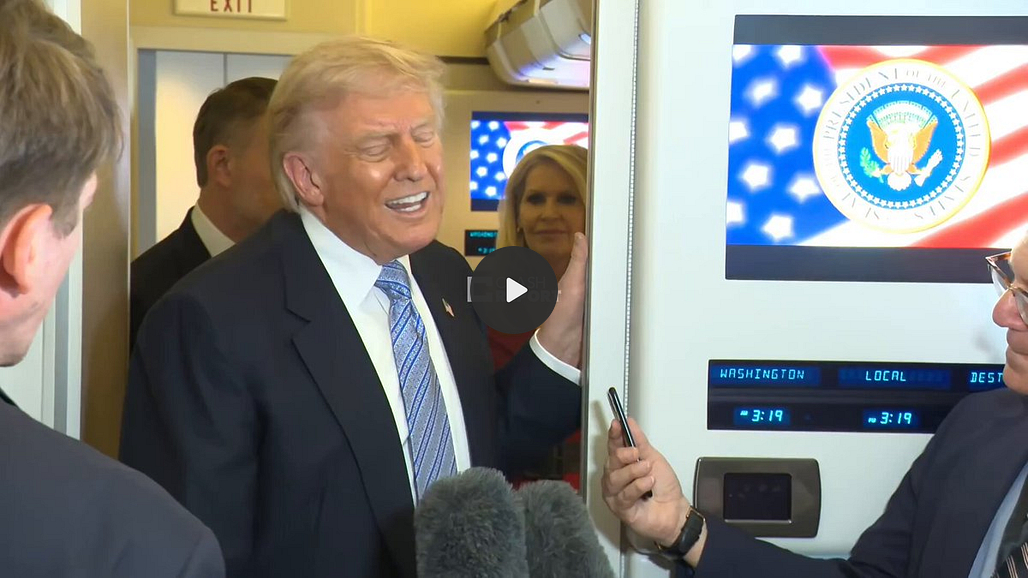
The entire interview is worth a watch. This conversation, along with some other remarks made on Air Force One upon leaving China, has led to alarm bells ringing in Washington and Taipei. Has Trump been so charmed by his ‘old friend’, Xi Jinping, that he has imbibed the CCP leader’s worldview when it comes to the status of Taiwan?

I write on this in my latest column:
It would be well within character for him to treat Taiwan as he has Ukraine, where it is Putin the strongman he favours and Zelensky the victim he disdains.
I was grateful to speak to the China historian Julian Gewirtz (JG), who served under the Biden administration, and the insightful Bonnie Glaser, head of the Indo-Pacific Programme at the German Marshall Fund, for the piece. Both were deeply concerned that Trump does not understand the full scale of Taiwan’s importance to American security/power in the region (there are echoes here of Trump’s disregard of Nato).
But I also issue a word of cautious optimism:
We only have a few short post-summit interviews to parse, like reading a precious few tea leaves. Remember too that this is the president who followed his 2017 visit by triggering a trade war with China, even after Xi had cleared the Forbidden Palace for him. It is too soon to know what Trump will do next.
There is also a point here that ‘strategic ambiguity’, the attitude that has informed the US’s Taiwan policy since the 1970s of neither confirming nor denying US support for Taiwan in the event of war, cuts both ways. It is both intended as a warning to Beijing not to risk American retaliation, and as a warning to Taipei to not do anything stupid out of overconfidence that America will definitely be on hand to help (like declaring independence).
On this issue, President Lai Ching-te has been much more provocative than his predecessors, even the last DPP President Tsai Ing-wen, in his rhetoric. He has referred to China as a ‘hostile foreign force’ 境外敵對勢力 and likes to drop the ‘Republic of China’ from his references to Taiwan. These may seem like obvious and rather anodyne descriptions, but to the hypersensitive ears of Beijing, they are treading dangerously close to declaring Taiwan as independent.
Joe Biden’s repeated confirmations that he would indeed support Taiwan in war, together with Nancy Pelosi’s visit to Taiwan in 2022, took the strait closer to crisis than at any point in the previous 26 years. So when Trump refuses to answer the question of whether he’d come to Taiwan’s defence, it is worth remembering that he is actually sticking closer to the tried-and-tested policy of ‘strategic ambiguity’. As blundering as Trump can be, on this refusal to answer the question, he is actually sticking to the script:

The real test is not some comments he gives to interviewers, but what he does in real action to support Taiwan. Because if he doesn’t want to go to war on the other side of the world, then deterrence is the best defence. This administration has already signed off on $11 billion worth of arms sales to Taiwan, more than under Biden. There is another $14 billion deal sat on Trump’s desk, which he should now approve.
What I’ve been reading/listening to:
Why China Waits – Amanda Hsiao and Bonnie Glaser in Foreign Affairs. Relevant to this discussion, this is a fascinating long read on Beijing’s latest calculations when it comes to Taiwan, and why it might wait. Much has been made of a supposed 2027 deadline. I was always sceptical of that (and no surprise that US intelligence has now walked it back), because these dynamics against war were always at play. The most remarkable revelation in this article is that support for Taiwanese independence has fallen among young Taiwanese. That overturns a long trend, and puts into perspective what I’ve previously written on pro-China, Gen-Z influencers in Taiwan.
China’s first use of Blocking Rules against U.S. sanctions on Chinese refineries – Stephenson Harwood. I don’t tend to link to (or read) blogs by law firms, but this analysis was incredibly illuminating on an underreported and relatively technical story of recent weeks. Before the summit, China’s Ministry of Commerce triggered anti-sanctions rules for the first time in reaction to the US sanctioning five Chinese refineries using Iranian oil. The upshot is that this is a pivotal moment in China’s response to being sanctioned. Rather than just taking it, Mofcom’s new rules allow Chinese entities to pursue third party companies (for example, insurers in the UK or banks in Singapore) in Chinese courts for following US sanctions.
China cover-up after pilot killed 132 by flying plane into mountain – Charles Bremner in The Times. This is a terribly sad story that we now have evidence that the passenger plane which crashed in Guangxi in 2022 was a murder-suicide by the pilot. It is totally predictable that Beijing would cover this up, as they have been repeatedly threatened by the spate of ‘revenge on society’ attacks of recent years. The former CCTV journalist Wang Zhi’an 王志安 did a good explainer on YouTube about this tragedy.
You might also enjoy my recent appearance on Channel 4’s podcast, The Fourcast, discussing the Trump-Xi summit as things were on Thursday last week.
Great summary of the real bottom line. Thank you.
Kevin Rudd's always sort of gone against the 2027-or-bust grain in his books and speeches, in favor of late 2020s early 2030s which seems a lot more sensible and epistemically rigorous.